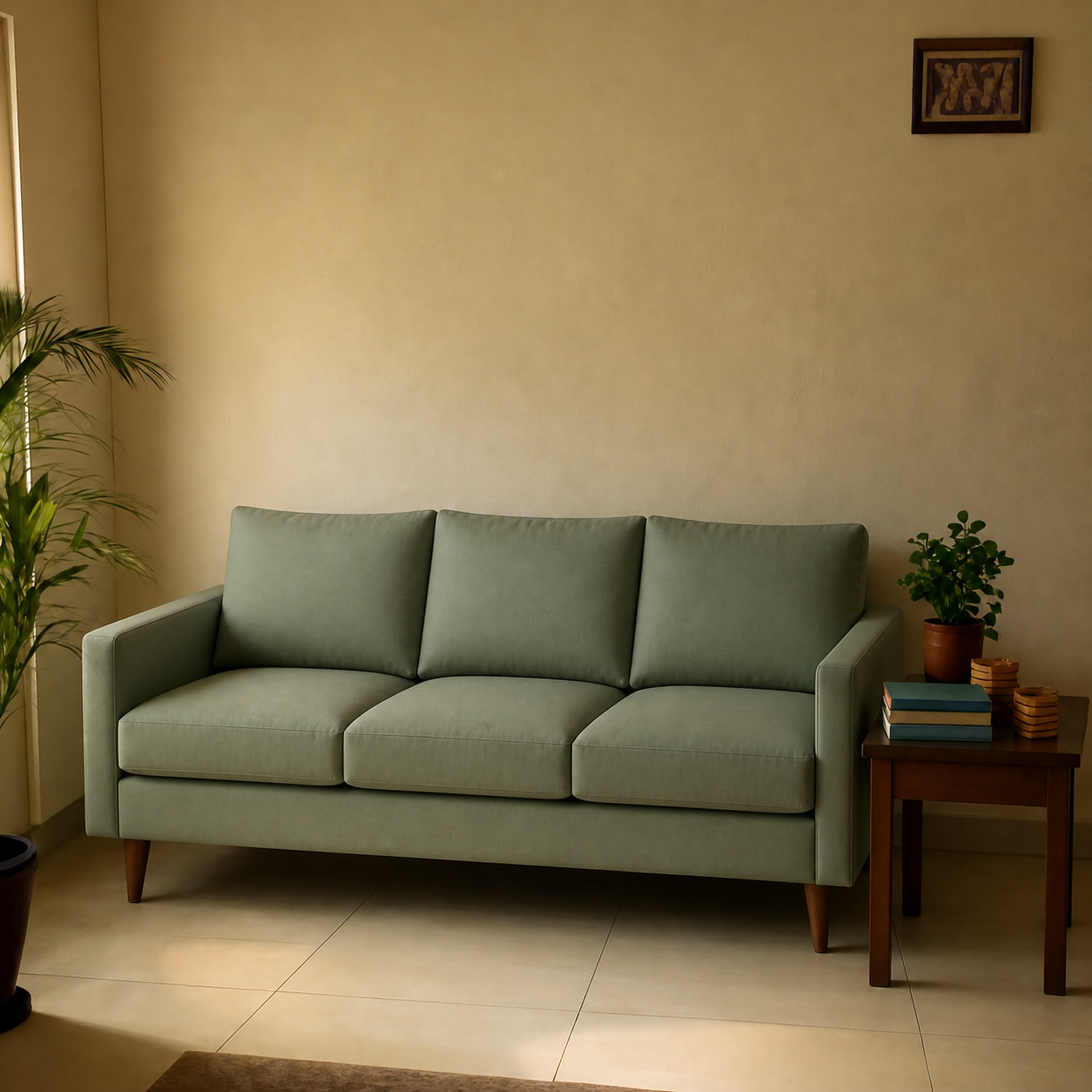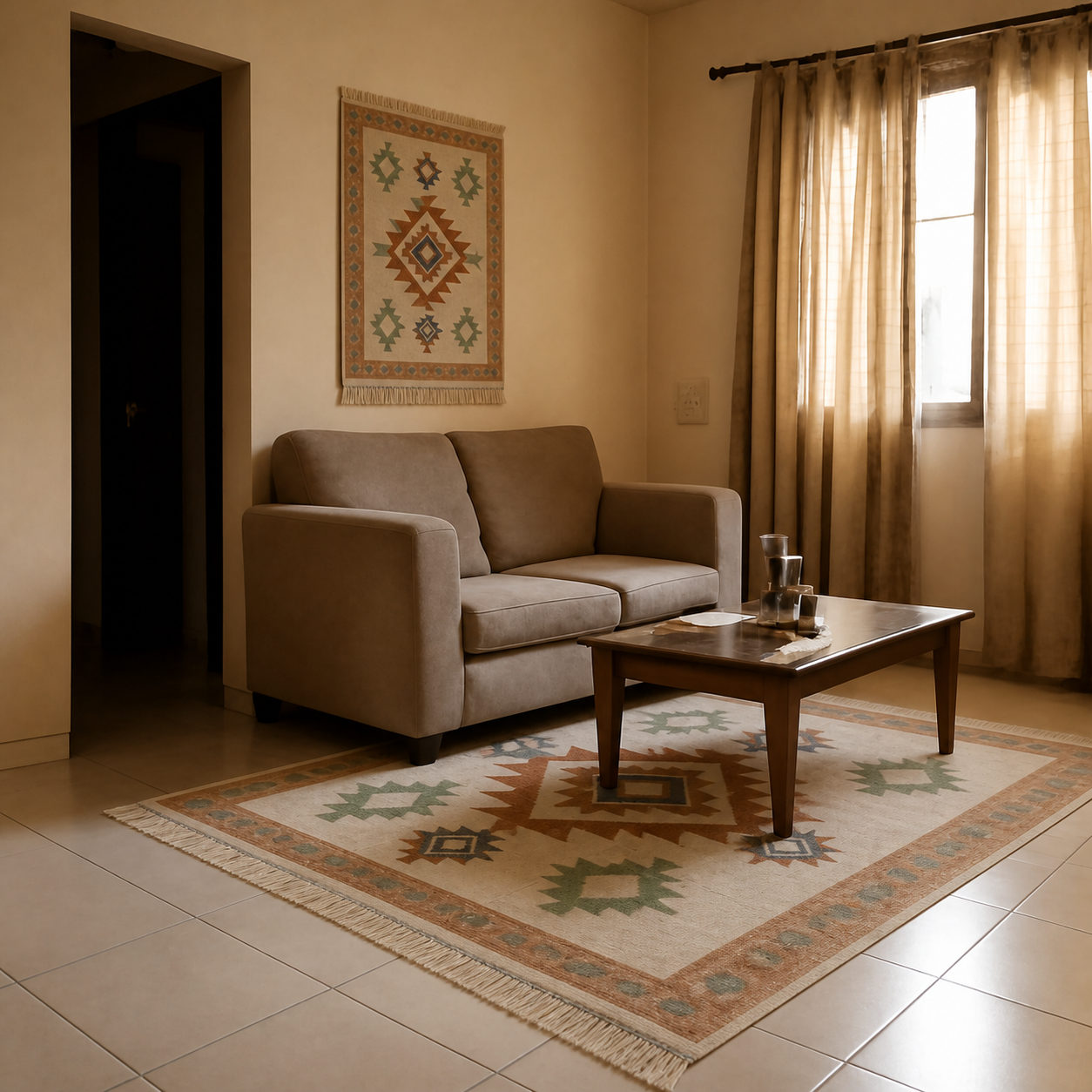
The best sofa for a small living room is a 72–78 inch (183–198 cm) apartment-scale three-seater, no deeper than 36 inches, with a 6–8 inch base clearance so it reads light. If the room is under 11 feet wide, drop down to a 60-inch loveseat or a sleeper that turns the room into a guest space at night. Skip deep-seat lounge designs — they eat the walkway and dwarf the room. Tape the footprint on your floor, then preview the exact sofa in a photo of your room before ordering.
What counts as “small” for a sofa decision?
A small living room, for the purposes of sofa shopping, is any room where the wall the sofa sits against is shorter than 12 feet (3.6 m), or where the perpendicular wall is under 11 feet. Below those numbers, the room can't absorb a full 84-inch sofa without eating the walkway behind the coffee table.
Two numbers do most of the work for sizing — sofa length should be roughly two-thirds of the wall it sits on, and sofa depth should leave at least 30 inches (76 cm) of free floor between the cushions and the next obstacle. If either rule breaks, the room reads cramped no matter how good the sofa is.
Apartment-scale sofa sizes that actually fit
| Type | Length | Depth | Best for |
|---|---|---|---|
| Loveseat | 58–62 in / 147–157 cm | 32–34 in | Studios, 1RK, reading nooks |
| Apartment 3-seater | 72–78 in / 183–198 cm | 32–36 in | 10–12 ft walls, 1BHK living rooms |
| Standard 3-seater | 82–88 in / 208–224 cm | 34–38 in | 12–14 ft walls |
| Sleeper / convertible | 72–82 in / 183–208 cm | 36–40 in | Rooms that double as guest beds |
| Deep-seat lounge | 90–100 in | 40–46 in | Avoid in small rooms — eats the walkway |
Why depth is the number you should check first
Sofa length gets all the attention but depth quietly decides whether the room still has a walkway. A 32-inch-deep traditional sofa needs about 18 inches of legroom in front of it before the coffee table; a 44-inch-deep lounge sofa needs at least 24 inches. Add the coffee table (16–20 inches deep) and a walking path (28–36 inches) and a small room runs out of floor fast.
- Under 11 ft room width: cap sofa depth at 34 inches.
- 11–12 ft room width: 36 inches is the safe ceiling.
- 12 ft+:a 38-inch sofa still leaves a working walkway. Beyond that, you're into mid-size territory and out of the “small living room” problem.
Should you pick a loveseat, a 3-seater, or a sleeper?
The decision tree is shorter than retailers make it sound:
- Loveseat (60 in): you live alone or as a couple, the room is under 10 ft wide, and you'd rather have space for two armchairs than one long sofa. A loveseat + accent chair reads bigger than a single full-size sofa in the same square footage.
- Apartment 3-seater (74–78 in): the workhorse for most small living rooms. Comfortably seats two adults, technically seats three. Pairs with a 5'×8' or 6'×9' rug.
- Sleeper: the room doubles as a guest room. Look at the unfolded depth too — a sleeper opens to 70–80 inches, so the coffee table needs to be lift-top or easy to move.
Layouts that work in a small living room
Three layouts cover almost every small living room. Pick the one that matches the dominant axis of your room.
Float-against-long-wall
Sofa flush to the long wall, TV or media unit opposite. The classic layout. Works for 10–12 ft walls. Leaves a clear walkway behind the coffee table.
Sofa-and-two-chairs L
Loveseat against one wall, two slim armchairs perpendicular. Better than a single big sofa when the room is more square than rectangular. Conversation flows; nobody is craning their neck to see the TV.
Float-the-sofa
Sofa pulled 18–24 inches off the wall with a narrow console behind. Counterintuitive in a small room, but it works when the sofa needs to separate two zones (living + dining). Only viable if you have at least 13 ft of length to play with.
Layouts that don't work — even when the numbers look fine
- L-shaped sectional in a sub-12-ft room. Even apartment sectionals start at 95 inches on the long side. They block walkways and force the coffee table to be tiny. See the sectional sizing guide if you're set on one.
- Two full sofas facing each other. Needs at least 14 ft of length to leave room for a coffee table and walkways. Reads grand in a magazine, cramped in a real apartment.
- Sofa under a window with a deep back. A 36-inch-deep sofa pushed against a window leaves no room to open the curtains. Either drop to a 32-inch traditional sofa or move the sofa off that wall.
- Recliner sofa with the room behind it. Reclining mechanisms need 12–18 inches of clearance behind the seat. Most small rooms can't spare that.
The tape-and-preview workflow
Before ordering, do these three checks in order — they cost nothing and catch most regret-purchases.
- 1Tape the full footprint on your floor with painter's tape. Walk around it for ten minutes. Pretend you're carrying a cup of tea.
- 2Measure the doorway, the hallway corner diagonal, and the stairwell turn. A 78-inch sofa fits through a 32-inch door — the turn just past it is the problem.
- 3Drop the product image into a visualizer to see the exact sofa in your room. See an example preview of a sofa placed in a small living room. Scale, colour and how it reads against your wall paint are the things measurement can't solve.
Small-room sofa features worth paying for
- Exposed legs, 5–7 inches tall. Visible floor under the sofa makes the room read bigger than a skirted sofa of the same dimensions.
- Tight back cushions (not loose pillows). Loose-back sofas push you forward and effectively shrink the usable seat. Tight-back designs sit smaller in the same footprint.
- Narrow arms (3–5 inches). Track arms or English roll arms in a slim profile. Pillow arms eat 4–6 inches per side without adding seating.
- Performance fabric. A small room means the sofa is the room. Stains have nowhere to hide. Pay for the better fabric on the smaller sofa.
Confirming the choice before the order
Tape measurements catch the physical-fit problems. They don't catch how the sofa colour reads against your specific wall paint, or how a chunky arm dwarfs your existing armchair. For those, paste the product image — or the Amazon link — into a sofa visualizer and see it placed into a photo of your living room. The whole point is to make the regret-purchase visible before the delivery fee is non-refundable.
If the sofa still feels too big in the preview, drop to the next size down or switch to a loveseat-plus-armchair layout. The room will always feel bigger than the spec sheet suggests once the actual sofa is in it. For more on the measurement side, see how to tell if a sofa will fit, and if a returned sofa is already your problem, here's the playbook.