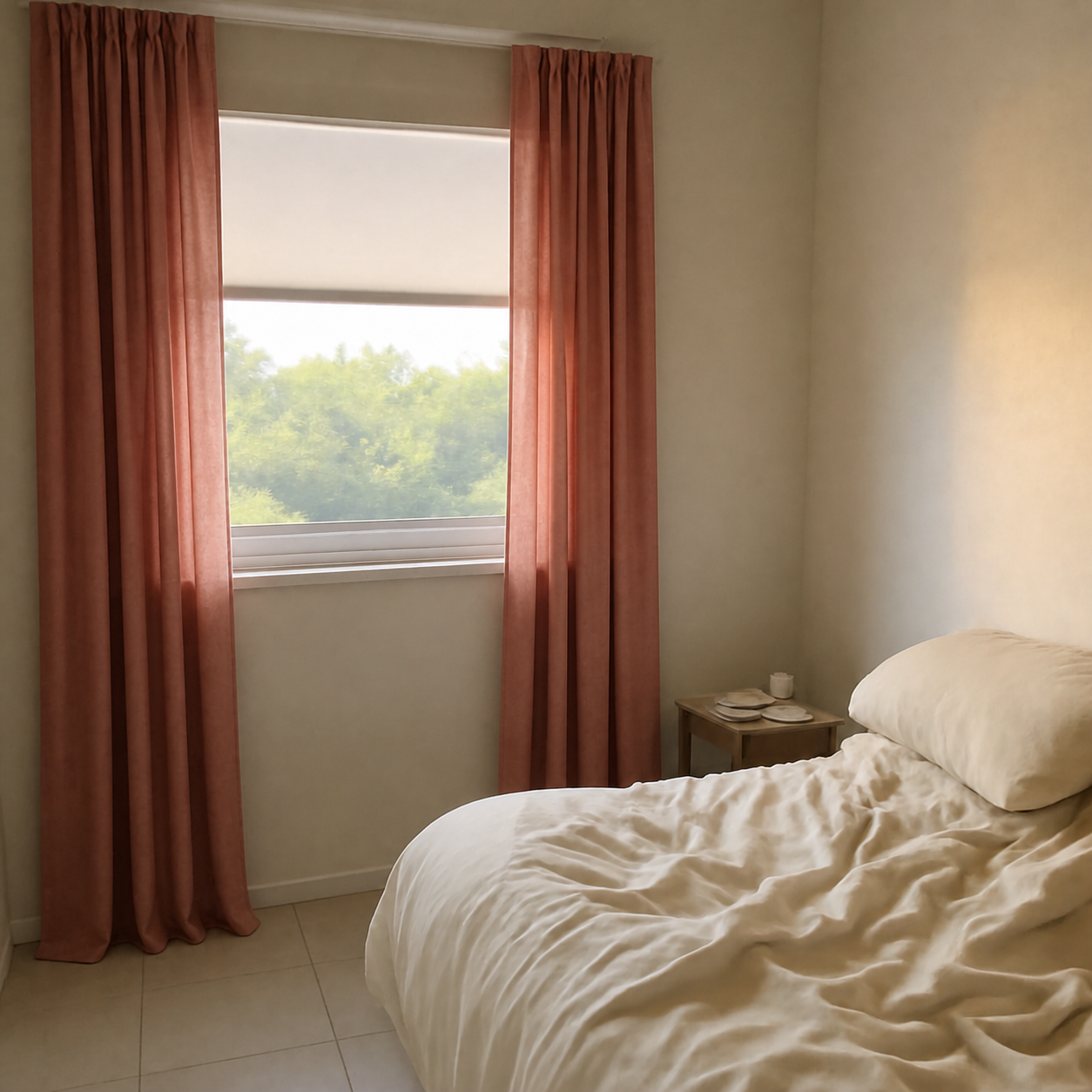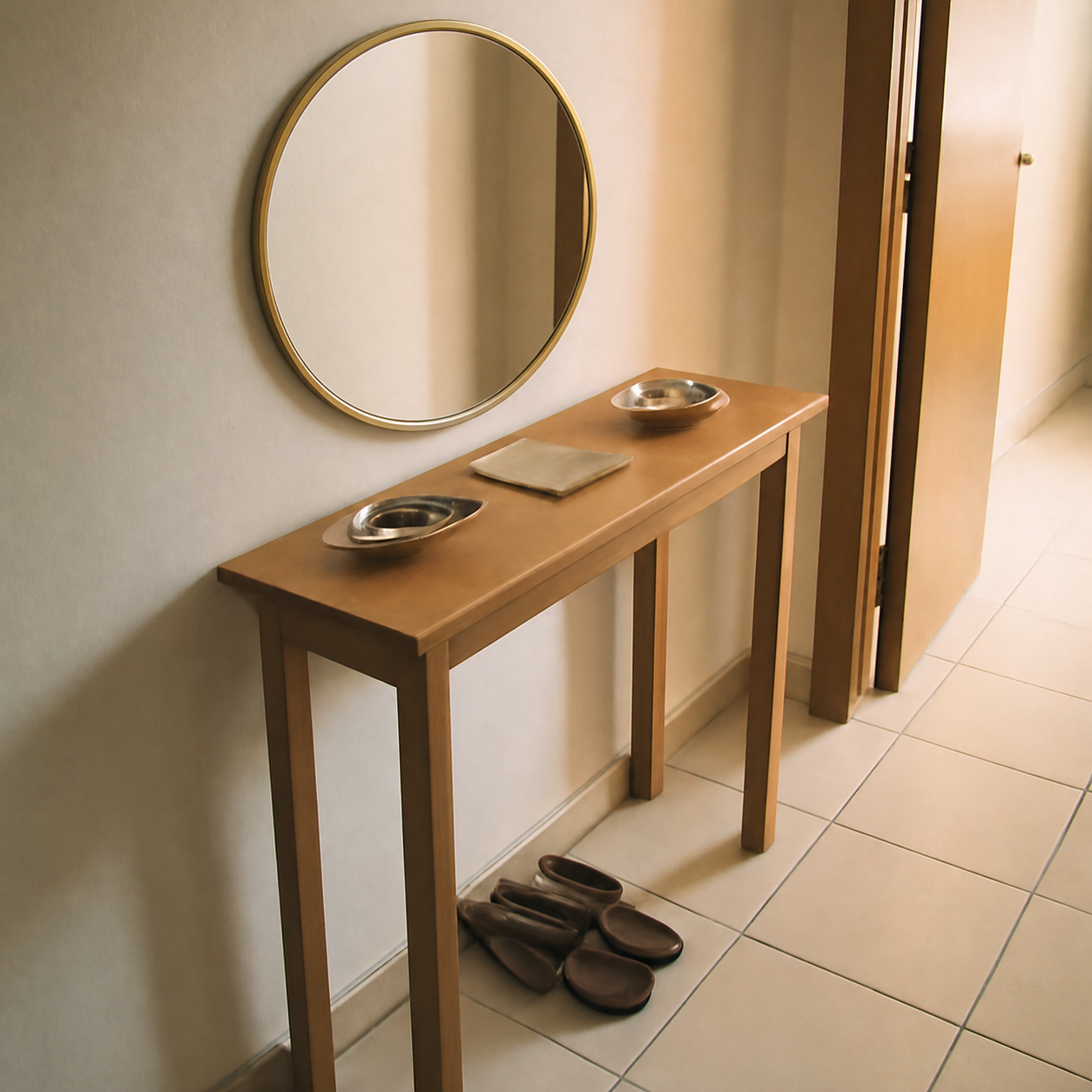
For a small bedroom, the bed itself is the only piece that has to be full-size — everything else should scale down. Leave at least 24 inches (60 cm) of walking clearance on each side of the bed (36 inches is more comfortable), pick slim 14–18 inch nightstands or wall-mounted shelves, and decide between a wardrobe and a dresser based on whether you have wall length or floor area to spare. Use one mirror to amplify the perceived size. Skip the bulky upholstered headboard and the dust ruffle — both eat visual space without doing any work.
What size bed fits in a small room?
Start with the bed and let everything else fall in around it. Most small bedrooms (under 120 sq ft / 11 sq m) can take a queen if you accept tight walkways. Anything smaller and you're in full / double territory.
| Mattress | Frame footprint | Min room | Comfortable room |
|---|---|---|---|
| Single / Twin | 38 × 75 in (97 × 191 cm) | 7 × 9 ft | 8 × 10 ft |
| Full / Double | 54 × 75 in (137 × 191 cm) | 9 × 10 ft | 10 × 11 ft |
| Queen | 60 × 80 in (152 × 203 cm) | 10 × 11 ft | 11 × 12 ft |
| King | 76 × 80 in (193 × 203 cm) | 12 × 12 ft | 13 × 13 ft |
“Minimum room” assumes 24-inch walkways on the sides and at the foot, plus space for a slim nightstand on one side. “Comfortable room” gives 36-inch walkways and nightstands on both sides.
How much walking clearance do you need around a bed?
24 inches (60 cm) is the absolute minimum on each side — enough to sidle past, not enough to comfortably get dressed beside the bed. 30 inches is functional. 36 inches is what hotel rooms use and what makes the room feel calm.
Two rules:
- Both sides equal if two people sleep there. One partner with a 36-inch path and one with an 18-inch squeeze leads to resentment older than the mattress.
- At least 30 inches at the foot. That's what you need to make the bed without bending sideways. Below 24 inches and bed-making becomes an athletic event.
Key takeaway
If 24-inch walkways on both sides means you can't fit a nightstand, downsize the bed before downsizing the walkway. You'll use the walkway every day.
Slim nightstands, floating shelves, or skip them?
Standard nightstands are 22–28 inches wide and 16–20 inches deep. In a small bedroom, both numbers are usually too big.
- Slim nightstand (14–18 in wide): holds a lamp, a phone, a book, a glass of water. That's the whole job.
- Wall-mounted shelf or floating nightstand: zero floor footprint. Best for very narrow rooms where the bed sits between two walls.
- Stool or stack of books: looks intentional, costs nothing, holds a glass and a lamp. Underrated.
Wall sconces beat nightstand lamps in small rooms by every measure — they free the surface, throw better reading light, and don't get knocked off when you reach for the alarm.
Wardrobe versus dresser — which fits a small room?
A wardrobe takes wall length and vertical air. A dresser takes floor area and breaks the eye line. Pick by which one you have more of.
- Wardrobe wins when: the room has a long unbroken wall (6 ft+), the ceiling is at least 8 ft, and you wear a lot of hanging clothes. Goes floor-to-ceiling, hides everything.
- Dresser wins when: you have no long wall but some floor area to spare, and most of your wardrobe is folded (T-shirts, sweaters, denim). A 30–36 inch wide, 30-inch-tall dresser doubles as a secondary surface for a lamp or a mirror.
- Built-in closet wins when: you have one. It's the cheapest storage per cubic foot. Add internal organisers before buying any new furniture.
For a 1BHK or studio, mirrored-door wardrobes do two jobs at once — the mirror amplifies the room while the wardrobe hides everything else.
Using a mirror to make a small bedroom feel bigger
One large mirror — minimum 30 inches wide, ideally 60 inches tall — on the wall opposite or perpendicular to the window. Three rules:
- Reflect light, not clutter. Place the mirror so it reflects the window, the open doorway, or a clear wall — not a pile of laundry.
- Floor to chest height. A floor mirror leaning against the wall reads bigger than a wall-hung mirror of the same dimensions. It also doesn't need a wall anchor.
- One mirror, not three. A gallery wall of small mirrors reads cluttered. A single large mirror reads architectural.
See a mirror placement preview for what a large mirror does to the perceived size of a tight space.
Why a bulky headboard hurts a small bedroom
A deep upholstered headboard (12–18 inches deep) effectively steals a foot of room length. It looks plush in the listing photo and intrusive in a 10×11 bedroom. Three slimmer options:
- Wall-mounted headboard: a thin upholstered panel screwed into the wall behind the bed. Two inches deep, full padded look.
- No headboard: push the bed against the wall. Add a tall artwork or tapestry above for visual anchor. Pulls the eye up, makes the ceiling read taller.
- Slim panel headboard: wood or rattan, 3–5 inches deep. The minimum visual weight to anchor the bed without sticking out.
What to skip in a small bedroom
- Bed skirts. Hide nothing useful, add visual weight, collect dust. Pick a platform bed with exposed legs instead — visible floor under the bed reads bigger.
- Throw pillows beyond two. Decorative pillows live on the floor every night and clutter the bed every morning. Two for sleeping is the budget.
- Matching bedroom sets. A matching dresser, mirror, two nightstands, bed-frame, and chest of drawers reads dated and uses every square inch of floor. Mix scales instead.
- Heavy curtains in a tiny room. Floor-length panels in dark fabrics shrink the room. Use light cotton or linen at the ceiling height, hung wider than the window. See a curtain preview to compare placements.
- A reading chair you won't use. If the bedroom has space for an accent chair you actually sit in, great. If it's a laundry pile you call “a chair” on bad days, skip it.
Confirming the layout before ordering
Tape every piece of furniture on the floor in painter's tape, full size. Lie on the “bed” for two minutes. Stand up. Walk around. The mistakes you don't notice until the truck arrives are usually about the angle the bedroom door swings into the room and where it intersects with the foot of the bed.
Then preview the actual pieces — the headboard, the wardrobe finish, the rug if you're adding one — in a photo of your room. Drop the product images into a mirror visualizer or a curtains visualizer to see how the finish reads against your wall paint. For rug sizing in a bedroom specifically, see the rug-size guide — the front-legs rule applies the same way to the bed.
And if the room is doubling as something else — a guest space, a home office — designing around one statement piece is the cleanest way to keep the room from reading like a storage unit.