Designing a room around one statement piece is the fastest way to make a space feel coherent without hiring a designer. Pick a single anchor — a sofa, a rug, a painting, a chandelier — budget 40–60% of the room's total spend on it, then build everything else as echoes of three points: a colour in the anchor, a material in the anchor, and a style era in the anchor. Three echoes is the magic number — less and the room feels accidental, more and it reads themed. The anchor does the work; the supporting cast just has to not fight it.
Why one statement piece outperforms one of everything
Rooms that try to be interesting in every direction read as noise. Eight different woods, six accent colours, four pattern families — nothing leads. Picking a single anchor solves three problems at once: it tells you what to spend the budget on, it gives the rest of the room a brief to follow, and it gives the eye somewhere to land when you walk in.
It also helps when budget is real. A $2,000 sofa with $500 of thoughtful supporting pieces around it reads more expensive than $2,500 split across six identical-tier items. The anchor is doing 60% of the work.
How do you pick the anchor?
The anchor is the largest, most visible, or most loved piece in the room. Three rules:
- It should be the first thing you see when you enter the room. If it's hidden behind the door, it can't do the anchor job — move it or pick something else.
- It should be something you'd defend to a designer. The anchor is the piece you wouldn't swap if every interior designer told you to. Sentimental, splurge, or non-negotiable in some way.
- One anchor per room. Two anchors fight. If both pieces are precious, ask which room each one anchors — they might want to be in different spaces.
What can be an anchor — by room
| Room | Strongest anchor | Also viable |
|---|---|---|
| Living room | Sofa | Rug, oversized art, fireplace, statement light |
| Dining room | Pendant or chandelier | Table, oversized mirror, sideboard |
| Bedroom | Bed (frame + headboard) | Statement wardrobe, large art over the bed |
| Entryway | Mirror | Console table, runner rug, pendant |
| Home office | Desk | Chair, bookshelf, statement task lamp |
How do you build the palette from the anchor?
Photograph the anchor in natural light. Open the photo full screen and identify three colours: the dominant body, one secondary tone, one accent. That's your room palette.
Apply the 60-30-10 rule:
- 60% — the dominant body colour. Walls, large furniture, big rug. Quiet and neutral enough to live with for years.
- 30% — the secondary. Curtains, large art, an accent chair. Adds movement without taking over.
- 10% — the accent. Pillows, vases, a bowl, a stack of books. The accent colour is also where you put the anchor's boldest hue.
Key takeaway
The colours in the anchor are non-negotiable. The wall paint, the curtain fabric, the pillow set — everything is chosen to support the colours already in the anchor, not to add new ones.
The three-echo rule
Once the anchor is in place, the room needs three echoes scattered through it. An echo is any piece that repeats one of the anchor's defining traits — a colour, a material, or a style era.
- Colour echo: a throw pillow that picks up the deepest tone in the sofa. A vase that matches the rug's accent. Spaced 6–10 feet apart so the eye travels.
- Material echo: if the anchor is rattan, repeat rattan in a light shade or a tray. If the anchor is brass, find a second brass accent (a lamp base, a frame). Two beats three; three beats four.
- Style echo: if the anchor is mid-century, at least two other pieces should read mid-century — a tapered leg, a teak finish, a curved silhouette. Don't make every piece mid-century or it reads as a showroom.
Worked example: living room around a deep-green velvet sofa
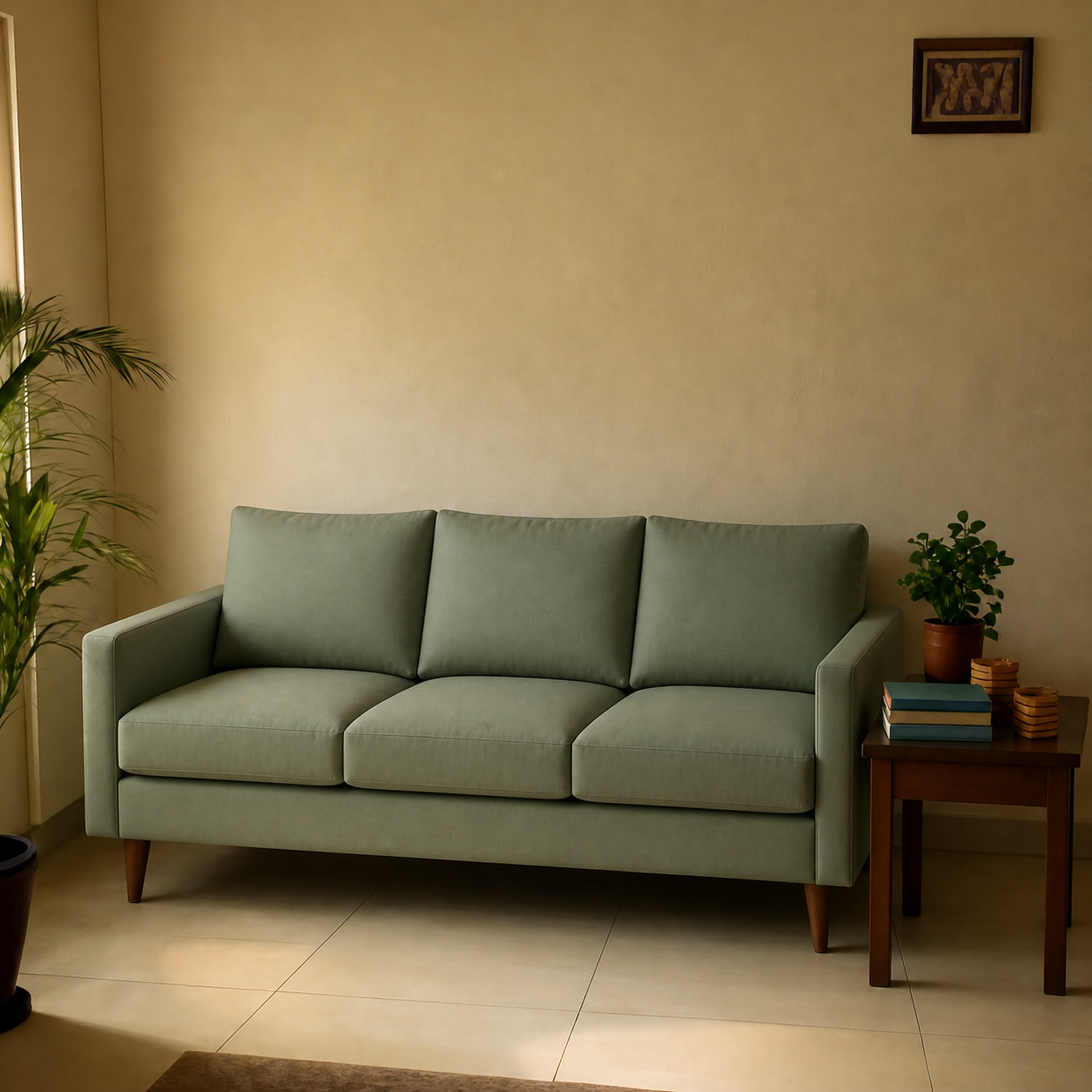
Anchor: 84-inch deep-green velvet sofa, brass-cap legs, mid-century silhouette.
- Palette: warm white walls (60%), oat or camel curtains (30%), brass and forest accents (10%).
- Colour echo: a deep-green ceramic vase on the bookshelf, a single forest cushion on an opposite accent chair.
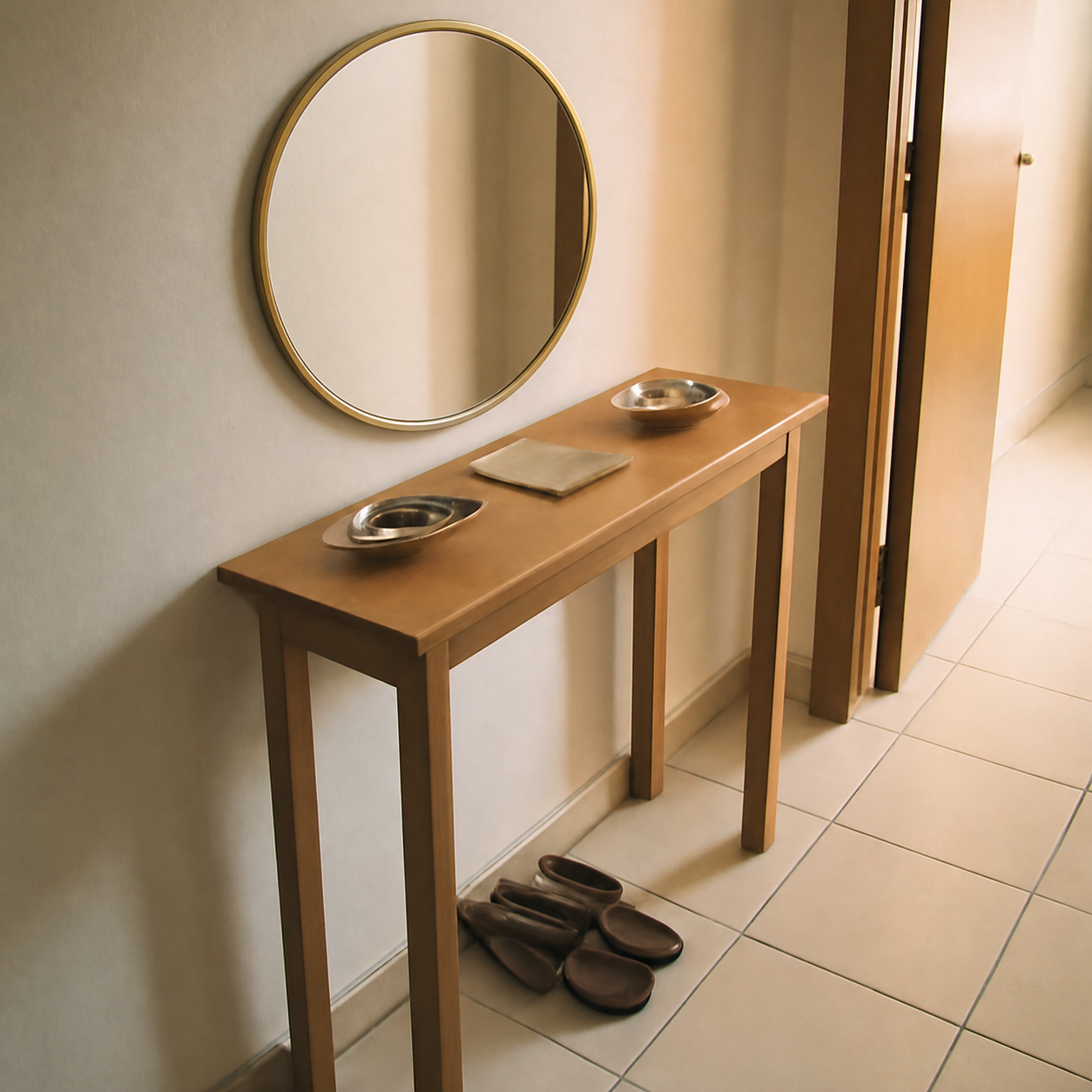
- Material echo: a brass table lamp on the console, a brass-framed mirror in the entry just visible from the sofa.
- Style echo: a walnut coffee table on tapered legs and a low sideboard in the same wood tone. Two mid-century cues; everything else is shape-neutral.
See an example sofa preview of this kind of anchor placement — the sofa does the heavy lifting, the rest of the room exists to support it.
Where to spend, where to save
Budget split for a single-anchor room:
| Item | % of room budget | Where to spend / save |
|---|---|---|
| Anchor | 40–60% | Pay for the upgraded fabric, the solid frame, the longer warranty |
| Rug | 15–20% | Spend on size first, materials second |
| Lighting | 10–15% | One sculptural fixture, two cheap supporting lamps |
| Side furniture (coffee, side, console) | 10–15% | Mid-tier; resale market is huge |
| Accessories (cushions, vases, art) | 5–10% | Replace freely — these are the “move things around” pieces |
Side tables, cushions, and accessories are where you can save most aggressively — they don't carry the room. The anchor and the rug do.
Common single-anchor mistakes
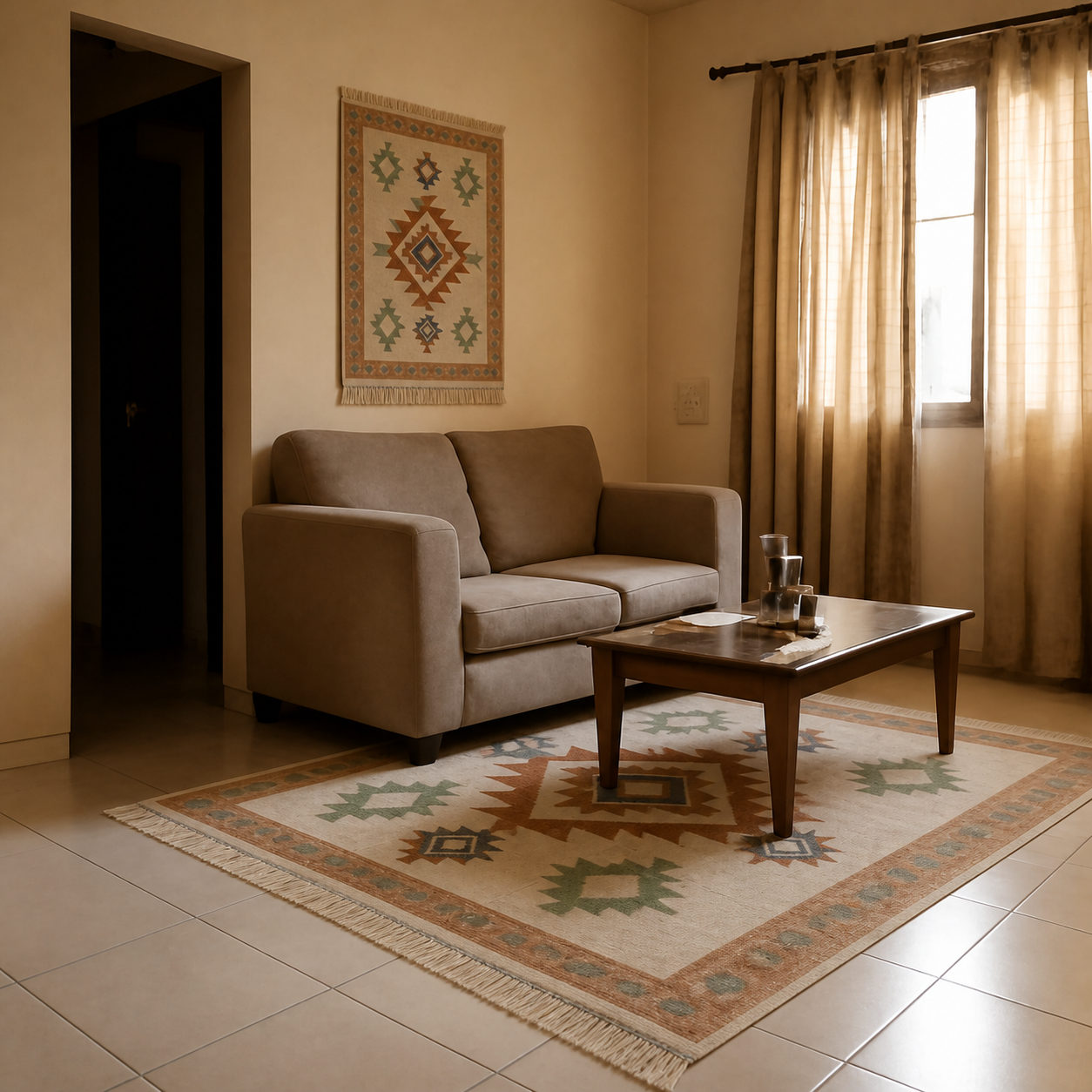
- Drowning the anchor in pattern. A bold sofa wants quiet supporting cast. A rug with the same intensity as the sofa cancels the anchor and confuses the room. Pick a calmer rug — see the rug-choice guide for pattern density.
- Two anchors. An emerald sofa and a leopard chair in the same room. Both insist on being looked at; neither can lead. One of them needs to be retired or moved.
- Echoing too literally. If the sofa is dusty pink, four dusty-pink pillows is a theme. One pillow is an echo. Three is a theme.
- Forgetting scale. A small statement piece can't anchor a big room. If the painting is 24 inches and the wall is 14 feet, the anchor isn't doing the job — either grow the art or pick a different anchor.
- Skipping the preview step. Anchors are the highest-spend items in the room and the hardest to return. Confirm what they look like in your space before paying.
Preview the anchor before you spend on it
The colour of a velvet sofa or a stone-topped table is the thing that catalog photos lie about most. A photo preview — the actual product placed into a photo of your room — settles the question in thirty seconds. Drop the product image into a sofa visualizer or a rug visualizer and see whether the anchor reads the way you want against your actual wall paint, floor tone, and natural light.
Then build the echoes around it. For specific decisions about the supporting cast — the coffee table, the pendant, the rug size — see the coffee-table sizing guide, the pendant-lighting guide, and the rug-size guide. The anchor decides the brief; these guides handle the execution.