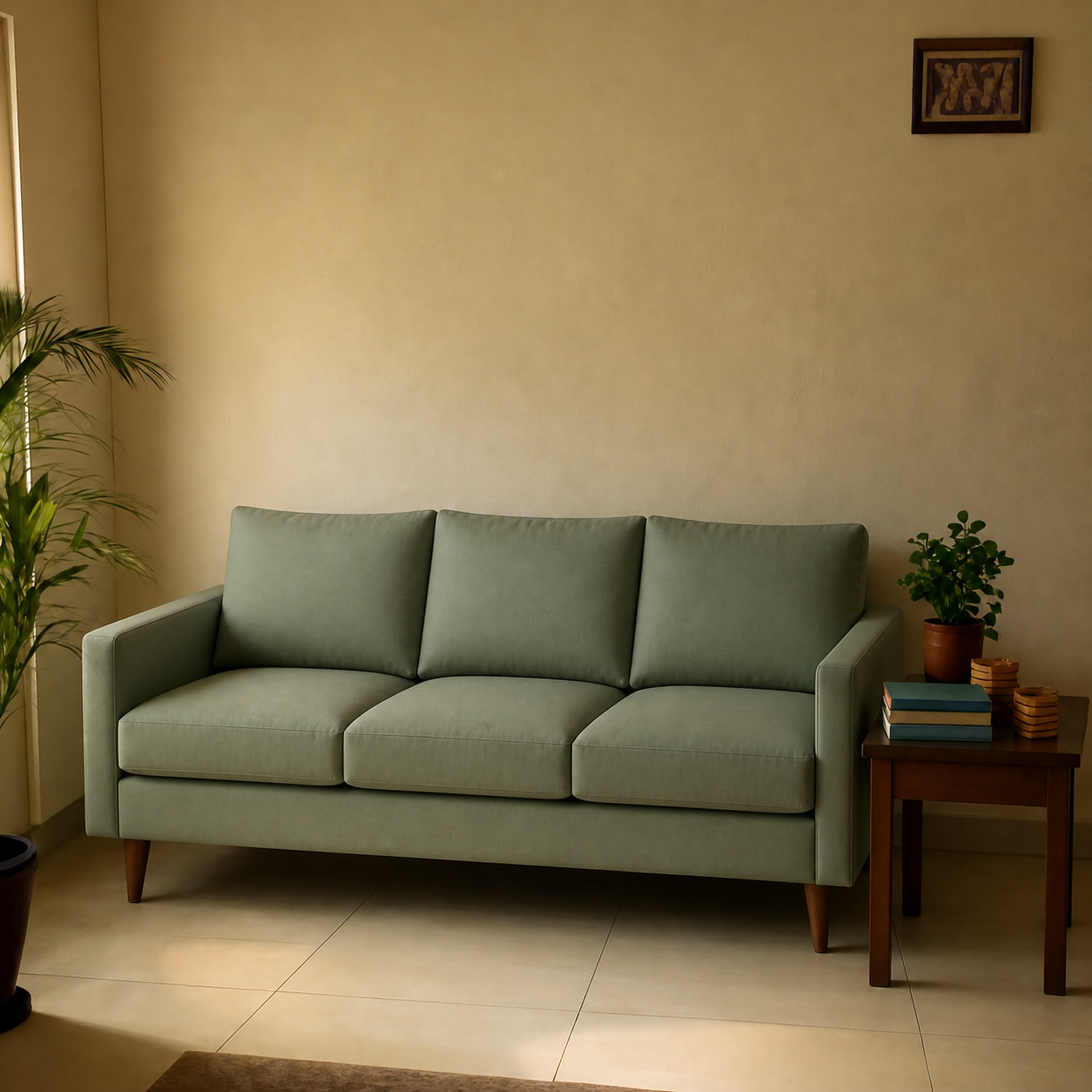
Returning a piece of furniture is expensive because three costs stack up at once: outbound freight (already paid), reverse logistics (palletizing, white-glove pickup, return shipping), and a restocking fee that's often 15–25% of the item's price. For a typical large item, the total cost of a return can easily reach $150–$400 even when the listing says “free returns” — because someone is absorbing that cost, and increasingly it's the customer.
The four costs hiding inside a furniture return
1. Reverse freight
Shipping a sofa from a warehouse to your door is expensive — typically $80–$200 for last-mile freight in the US, often higher in India where last-mile logistics for bulky items is less standardised. Sending it back costs the same, or more, because return freight rarely benefits from the same volume discounts as outbound.
2. White-glove pickup
Furniture isn't dropped at a courier kiosk. Pickup involves a two-person crew, a truck, and a scheduled time slot. Industry rates for white-glove reverse pickup typically run $100–$300 per item. Some sellers waive this for damaged-in-transit returns and charge it for buyer's-remorse returns.
3. Restocking fees
Most large-furniture sellers charge 15–25% restocking on non-damaged returns. Wayfair, Pottery Barn, West Elm, and most major Indian online furniture retailers spell this out in their return policies. The fee covers the cost of inspecting, repackaging, and reselling the returned item — which often can't be sold as new again.
4. Repackaging + resale loss
A returned sofa rarely goes back into A-stock inventory. It moves to open-box or clearance at a 30–50% discount, or to liquidation. The difference between the original sale price and the eventual resale is a real loss the seller eats — and that loss is priced into the next customer's order.
What “free returns” actually means for furniture
“Free returns” on furniture almost always has fine print:
- Original shipping fees are non-refundable.
- Return shipping is the buyer's responsibility — quoted at retail freight rates.
- Items must be in original packaging — which is often impossible to reassemble.
- Custom-ordered, made-to-order, or upholstered-in-your-fabric items are usually non-returnable.
Read the policy before ordering. The word “free” on the product page rarely matches the policy page's detail.
The hidden cost: time
Beyond money, a furniture return takes weeks. Pickup scheduling, the physical pickup, refund processing — six to eight weeks from delivery to refund is typical. During that time the item sits in your living room, often in its original packaging, blocking the space you were trying to furnish.
Environmental cost
Industry research (Optoro, Returnly, Narvar) consistently shows that a significant share of returned furniture never resells — it ends up in liquidation, donation, or landfill. The shipping itself doubles the carbon footprint of the original delivery, and the packaging is almost never recycled.
How to avoid the return in the first place
Most furniture returns happen because the item didn't look or fit the way the buyer expected. That's catchable upstream:
- Measure the wall and the doorway, not just the room. The sofa-fit checklist covers the specifics.
- Tape-outline the footprint on your floor and walk around it for ten minutes.
- Preview the exact piece in a photo of your actual room — this catches the colour and scale mismatches that measurements can't reveal.
- Read at least five recent delivery reviews. Damaged-in-transit issues cluster around specific products.
Ten minutes of preview saves weeks of waiting and several hundred dollars in fees. Try a preview here before you commit.