“Free returns” on big-ticket home items is almost never actually free to the buyer. The phrase covers a narrow scenario — usually a fully boxed, undamaged item picked up within a short window — and excludes original shipping fees, restocking deductions, depreciation while you wait for the refund, and the weeks of time the item blocks your living room. For a ₹40,000 sofa or a $1,200 sectional, the realistic out-of-pocket on a “free” return is often 10–25% of the order value.
What “free returns” means in the fine print
Retailers use the phrase differently. The product page banner is often the most generous reading; the policy page is the enforceable one. Five exclusions show up over and over:
- Original shipping is non-refundable. Even a “free shipping” promotion is treated as a value transferred to the order — return it and the freight cost is netted off the refund.
- Original packaging required. Most large-furniture return policies require the box, foam, and bracing the item arrived in. If you flattened the carton, you owe a repackaging fee — typically ₹500–₹1,500 in India, $50–$150 in the US.
- Restocking fee for buyer's remorse. 15–25% is the industry standard for non-damaged returns of large items. Wayfair, Pottery Barn, West Elm, and most Indian online furniture retailers spell this out.
- Pickup window is narrow. Many policies allow free return only inside 7–14 days. Outside that, you book and pay for the freight pickup yourself.
- “Custom” or “made-to-order” pieces are excluded entirely. Choosing a fabric, leg finish, or size from a dropdown is often enough to flip an item to non-returnable. Read the SKU page, not the marketing banner.
Key takeaway
The product-page banner says “free returns”. The enforceable text is on the returns policy page, two clicks away. Read that one before you order anything over ₹10,000 / $200.
The five hidden costs, line by line
| Hidden cost | Typical hit | Who pays |
|---|---|---|
| Original shipping (non-refundable) | 5–10% of order value | Buyer |
| Restocking fee | 15–25% of item price | Buyer |
| Repackaging surcharge | ₹500–₹1,500 / $50–$150 | Buyer (if box discarded) |
| Refund timing depreciation | 6–8 weeks of capital tied up | Buyer |
| Time cost (pickup, follow-up) | 4–10 hours of admin | Buyer |
Stack them up and a ₹40,000 sofa return can shave ₹6,000–₹10,000 off the refund. A $1,200 sectional return often nets back closer to $900–$1,000 after restocking, shipping deductions, and repackaging. The product page advertised “free”. The bank statement disagrees.
The depreciation clock — why a 6-week refund window matters
A furniture refund is not instant. Once the pickup is scheduled (1–3 weeks), the item ships back (1–2 weeks), gets inspected at the warehouse (1–2 weeks), and the credit posts to your card (5–10 days). Six to eight weeks from delivery to refund is typical, and that range is consistent with what the breakdown of reverse-logistics costs already explains.
That delay is its own cost. The money sits in someone else's account while you continue to need a sofa. A second purchase has to come out of fresh cash, not the refund. For anyone on a budget, the working-capital hit is real — and a second sofa ordered in a hurry is the one most likely to be returned again.
Why “free returns” exists at all
Retailers offer it because online furniture has a 20–30% return rate and the friction of a “you pay return shipping” policy would tank conversion. The phrase lifts add-to-cart rates more than it raises return rates, because most buyers never read the policy page. The economics work for the seller; the costs get redistributed in ways the buyer doesn't see at checkout.
What to do before you click buy
The cheapest return is the one that never happens. Four habits that catch most of the regret before it ships:
- 1Read the returns policy page itself — not the banner. Note the window in days, the restocking percentage, and whether the item is excluded as custom or made-to-order.
- 2Measure twice — the wall, the doorway, and the diagonal across any stairwell turn. The sofa-fit checklist covers the right numbers.
- 3Preview the exact piece in a photo of your actual room — colour and scale mismatches are the biggest reason people end up trying to return a sofa that didn't fit.
- 4If you still have to choose between two pieces, save the boxes and bracing from the first delivery until you've sat on it for a weekend. The repackaging fee alone makes this worth doing.
Where preview saves the most money
Three categories where buyer's-remorse returns spike — and where a quick photo preview catches the mismatch in seconds:
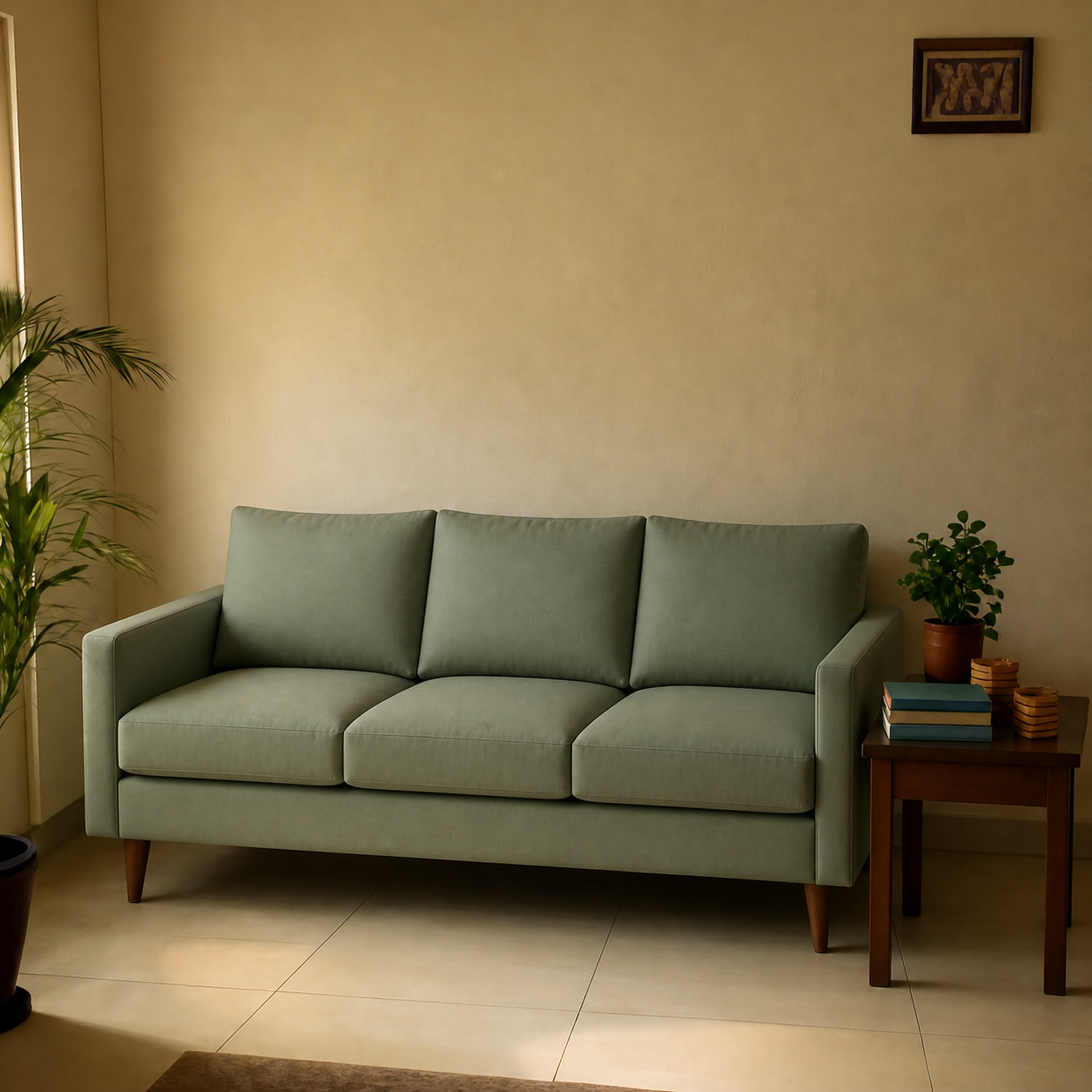
- Sofas and sectionals. Length is rarely the issue; depth, colour against your wall paint, and scale against your existing rug are. The sofa preview demo shows what a placed-in-your-room preview looks like.
- Rugs. A rug photographs perfectly on a white studio floor and completely differently on your beige tile. See the rug visualizer for category-level previews before ordering.
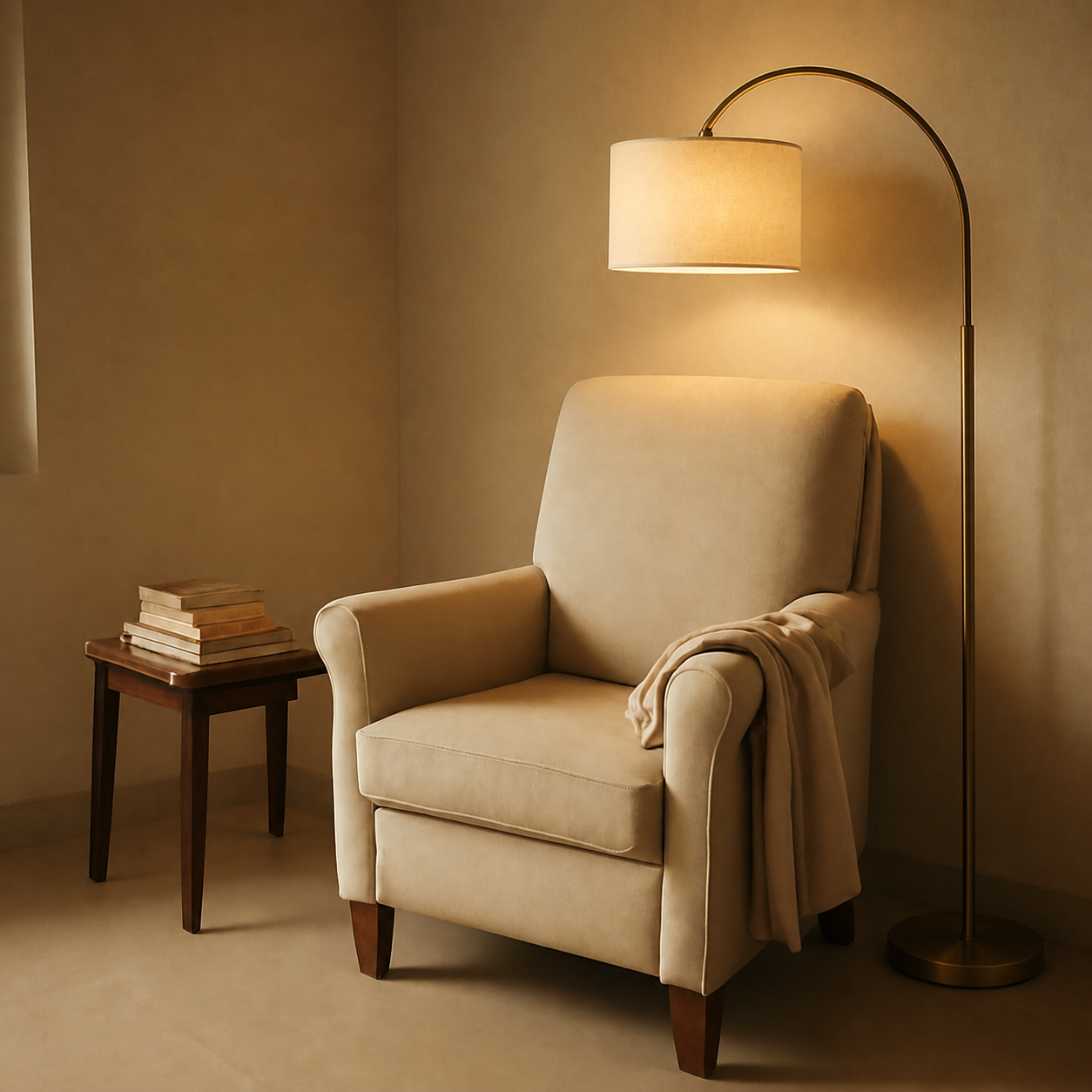
- Statement lighting. A pendant or floor lamp's warmth, scale, and shadow line are the parts that don't come through in product photos. The floor-lamp corner demo shows the difference a preview makes.
The honest cost of one return
Take a ₹35,000 sofa with “free returns” on the listing page. The policy page says 15% restocking, original shipping (₹1,500) non-refundable, and original packaging required. You realised on day 9 that the colour is wrong.
- Restocking: ₹5,250 (15% of ₹35,000)
- Original shipping forfeit: ₹1,500
- Repackaging (box thrown out): ₹1,000
- 6 weeks of capital tied up: about ₹350 in opportunity cost
- Net refund: about ₹27,000 out of ₹35,000
That is a ₹8,000 hit on a “free” return. A ten-second preview in a photo of your actual living room would have caught the colour mismatch for nothing. Try a preview here before you place the order.