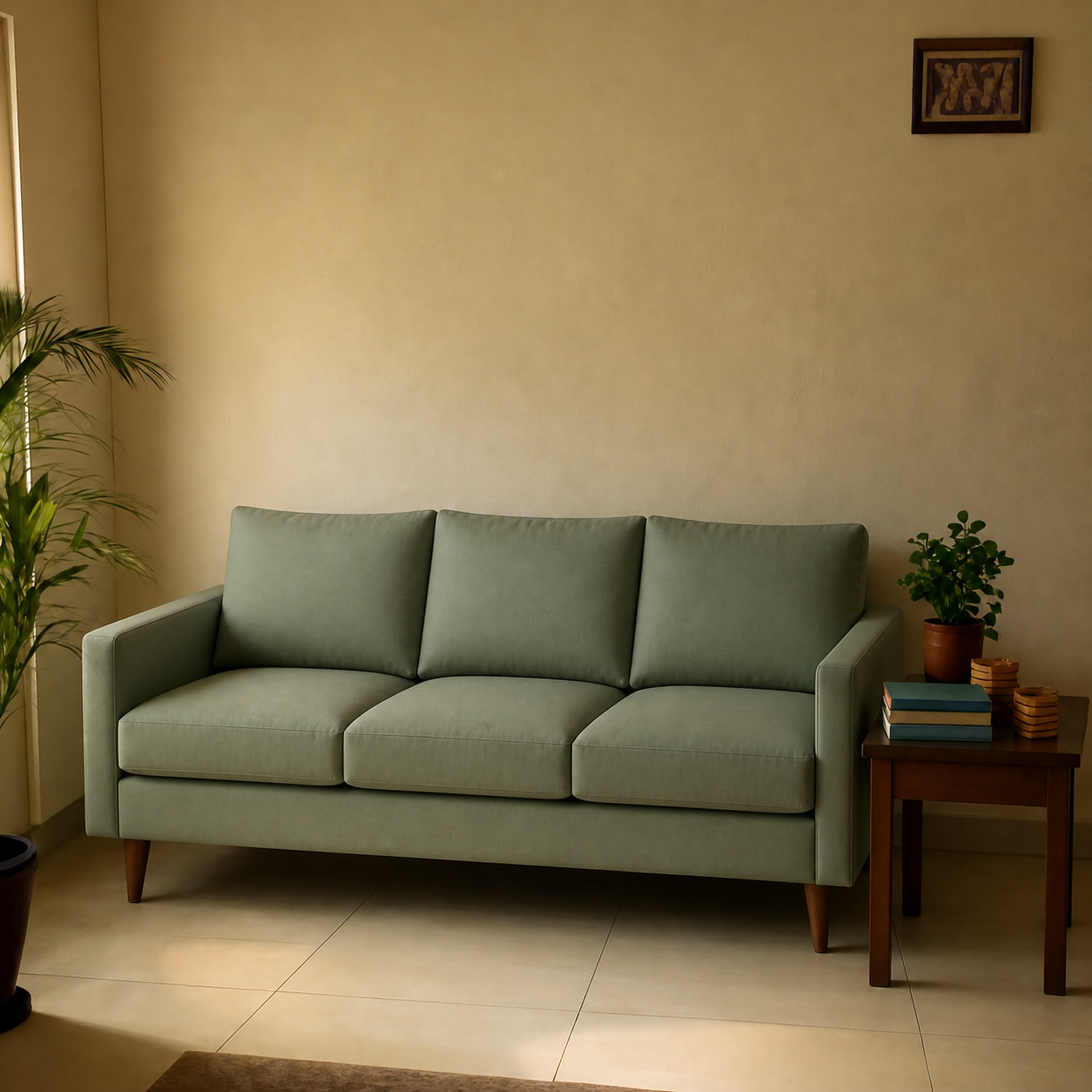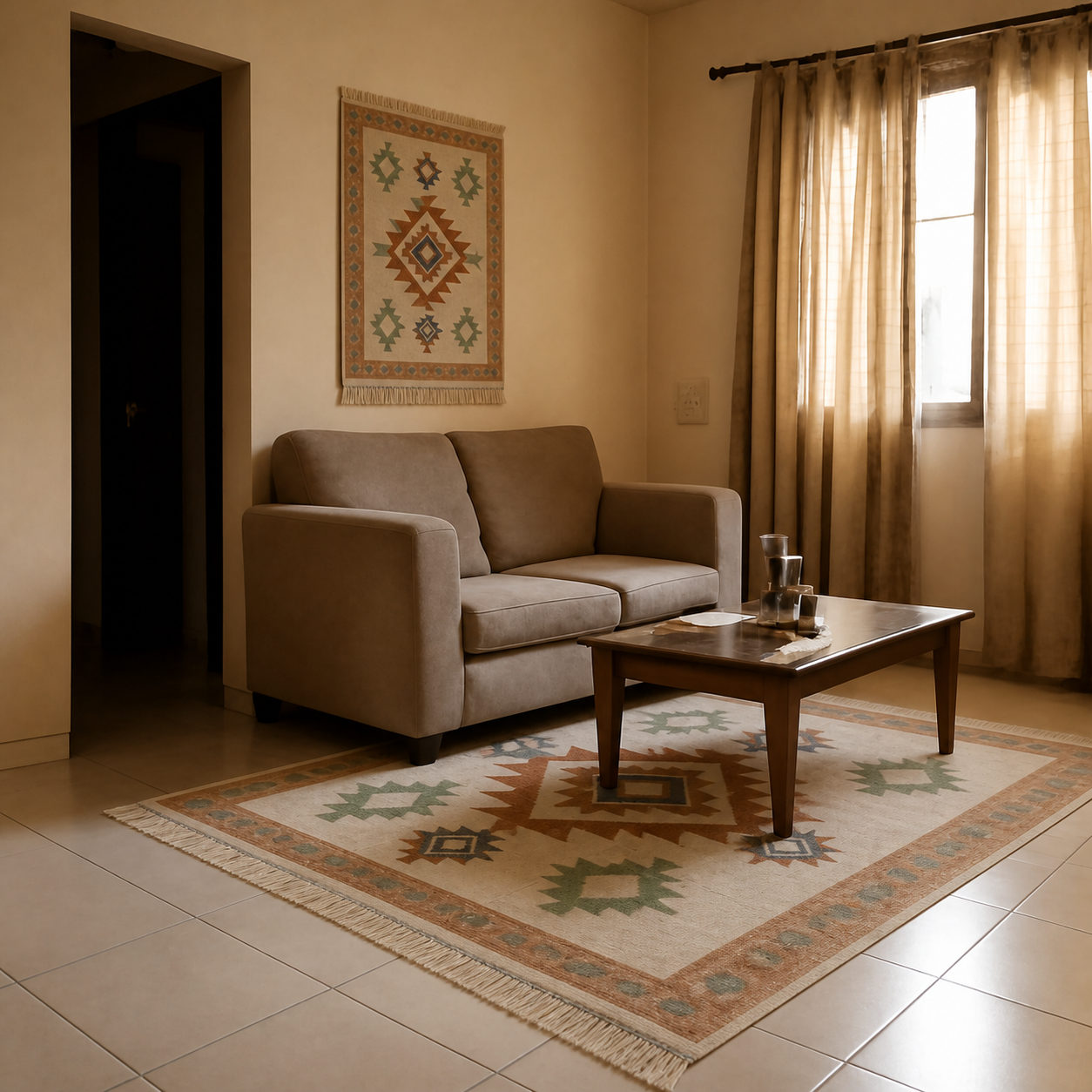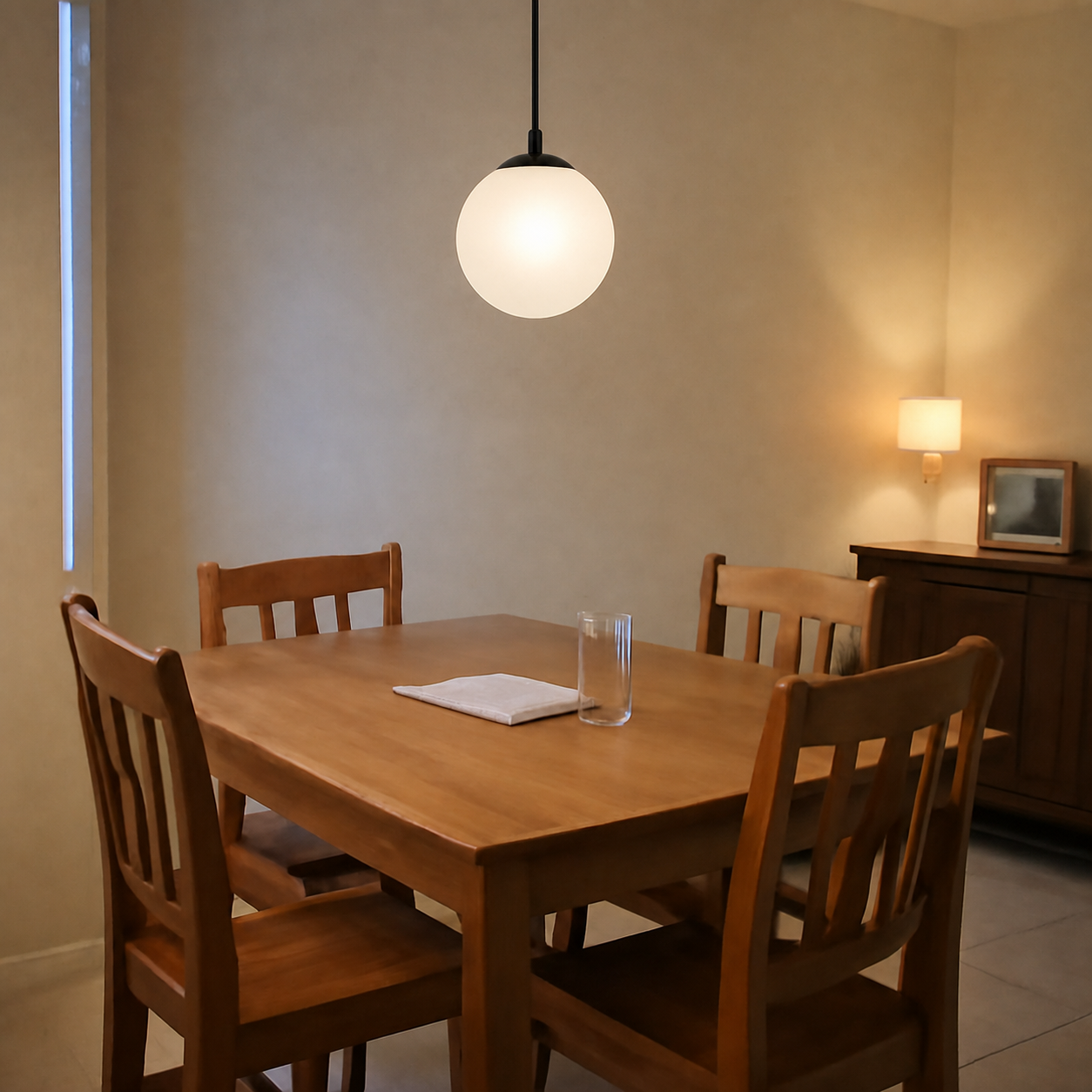
Hiring an interior designer and using an AI room previewer are not substitutes — they answer different questions. A human designer costs $79-$300+ per room (Havenly, Spacejoy, Decorist) up to $150-$300+ per hour locally, and what you are buying is taste and coherence across an entire room. An AI room previewer is free and what it gives you is a confident yes/no on individual products you are about to buy. The right move depends on how big the decision is and how much faith you have in your own taste.
What an interior designer actually delivers
Strip away the marketing language and a designer's deliverable is some combination of these:
- A taste filter. They tell you what is and is not working in your space and steer you toward a coherent direction. This is the highest-value bit and the one AI cannot do.
- A shoppable list. Specific products at specific prices, often from their preferred trade vendors.
- A layout. Where the sofa sits, where the rug goes, how much walking room to leave.
- Renderings. 3D or board-style mockups of the finished room. Quality varies by tier.
- Project management. On bigger projects: trades, schedules, change orders. Hourly local designers do this; subscription apps mostly do not.
Designer pricing in 2026
| Service | Typical price | What you get |
|---|---|---|
| Havenly Mini | ~$79/room | Mood board + shopping list |
| Havenly Full | ~$159+/room | 3D renders + revisions |
| Decorist Classic | ~$299/room | Two concept boards + plan |
| Spacejoy | ~$59-249/room | 3D renders, India + US |
| Local designer (hourly) | $100-300/hr | Consult through full project |
| AI room previewer | Free | Per-product preview, no taste filter |
What an AI room previewer actually delivers
A tool like PlopIt takes one product and one room photo and answers one question: does this specific thing look right in this specific place? It does not pick the product for you, it does not have a point of view on whether you should buy mid-century or contemporary, and it does not tell you whether your rug, sofa, and curtains together form a coherent room.
What it does do, fast and free, is replace a Photoshop session or a guess with a photoreal answer for whatever you are about to click “buy” on. Try it on the sofa demo or the rug demo.
What a designer does that AI cannot
- Tell you what to buy. AI shows you what something looks like; only a human (or your own taste) decides whether it should be there.
- Coherence across a room. Sofa, rug, curtains, lighting, and art together — that is a taste problem, not a per-product check.
- Resolve trade-offs. Budget vs durability, scale vs layout, partner A vs partner B. A good designer mediates and you walk away with a decision.
- Catch what you missed. Outlet placement, ceiling height, that the window faces north so the velvet will read flat. The kind of thing experience sees and software cannot.
What AI does that a designer (usually) doesn't
- Run cheap, fast iterations. Five sofa candidates, five rug candidates, twenty-five combinations — the marginal cost is zero. A designer revision costs an hour.
- Tell you whether a sale item is worth it. Designers usually work from curated catalogues; AI works on any product link, including a flash sale you found ten minutes ago.
- Show photoreal colour against your real walls. Designer renderings are usually stylized 3D. A photo composite shows the real product photographed under real lighting against your wall.
- Stay available at 11 pm. Most furniture decisions are made on weekends and at night. AI is on; a designer is asleep.
Which one to hire (and when)
- One purchase, clear preference → AI is enough. A sofa replacement, a new rug, a mirror — preview the candidates and pick.
- Full room, no anchor piece → Designer or budget designer. Havenly or Spacejoy at the cheap end; a local hourly designer at the higher end.
- Renovation or layout change → Always a designer (or architect). Move-the-walls decisions are not a product-preview problem.
- Whole apartment from scratch → Designer with hourly billing, used surgically — taste filter + coherence at the start, AI for individual product checks during shopping.
The combo that costs the least and works
If you have any budget at all, a one-hour designer consult plus an AI room previewer is the smartest combination:
- Designer hour ($100-300): taste direction, palette, anchor-piece advice, a few specific recommendations. You leave with a plan.
- AI previewer (free): for every product you are about to buy, see it in your room first. Catches the “the picture lied” mistakes that drive most returns.
On a $4,000 room budget that is 3-7% spent on planning and a much higher hit-rate on the other 93%. The math is good. See why furniture returns are expensive for what a single failed purchase costs.
Honest limits of both
A designer is only as good as their fit with your taste — a great designer pointed at the wrong client produces a beautiful room you do not want to live in. An AI previewer is only as accurate as the photo you give it and the product dimensions on the listing; it does not replace a tape measure for stairwell clearance and cannot tell you whether the sofa will survive a toddler. For the scale and lighting limits see how accurate AI visualizers are for scale and lighting; for designer-led alternatives see Modsy alternatives.
The short version
Designers sell taste and coherence at the room level. AI sells confidence at the product level. The cheapest path to a room you like is one hour of the former and unlimited use of the latter, not picking one over the other.