AR room apps and AI image generation solve different parts of the same problem. AR overlays a 3D model of a product through your phone camera so you can walk around it and feel the footprint; AI composition pastes a real product into a photo of your room at correct scale, lighting, and perspective so you can judge colour and style. AR wins for spatial questions, AI wins for visual ones. Most buyers benefit from using both for different parts of the same purchase.
How each one actually works
AR room apps — IKEA Place, Houzz View, Amazon AR View, Wayfair View in Room 3D — use ARKit (iOS) or ARCore (Android) to map your floor and walls in real time. They then drop a manufacturer-supplied 3D model into that mapped space, anchored to a real-world point. You see the product through the camera at true scale and can walk around it.
AI image generation — photo-composition tools like PlopIt take two flat images (your room and a product) and produce a new flat image with the product composited in. They infer the room geometry, place the product at a plausible scale, and re-light it so reflections and shadows match the scene.
Side-by-side comparison
| Dimension | AR overlay | AI composition |
|---|---|---|
| Output | Live 3D in camera | Photorealistic still |
| Walk around | Yes | No |
| Footprint check | Excellent | Approximate |
| Material realism | Stylized 3D textures | Real product photo |
| Lighting match | Generic AR shading | Inferred from room |
| Cross-retailer | No (per-app catalogue) | Any URL or image |
| Shareable | Screenshot | PNG export |
| Works on desktop | No | Yes |
Where AR is clearly better
- Footprint and walking clearance. Will a sectional leave enough room to walk past the coffee table? AR is the answer — you literally walk the path.
- Multiple angles. AR lets you crouch, stand, and pace. A still image is one camera angle.
- Stand-alone pieces with strong silhouettes. Floor lamps, side tables, plant stands — pieces whose footprint matters more than their finish.
- In-store-feel decisions. The AR loop of plant, observe, move on takes seconds. Quick yes/no decisions.
Where AI composition is clearly better
- Colour and material match. A real photo of the actual product, lit by your actual room, beats an AR shader almost every time. This is the “does this navy velvet read too warm against my floor?” question.
- Cross-retailer comparisons. Comparing an Amazon sofa, a Wayfair sofa, and a piece from a local maker — none have AR models in the same app. All work in a photo-composition tool.
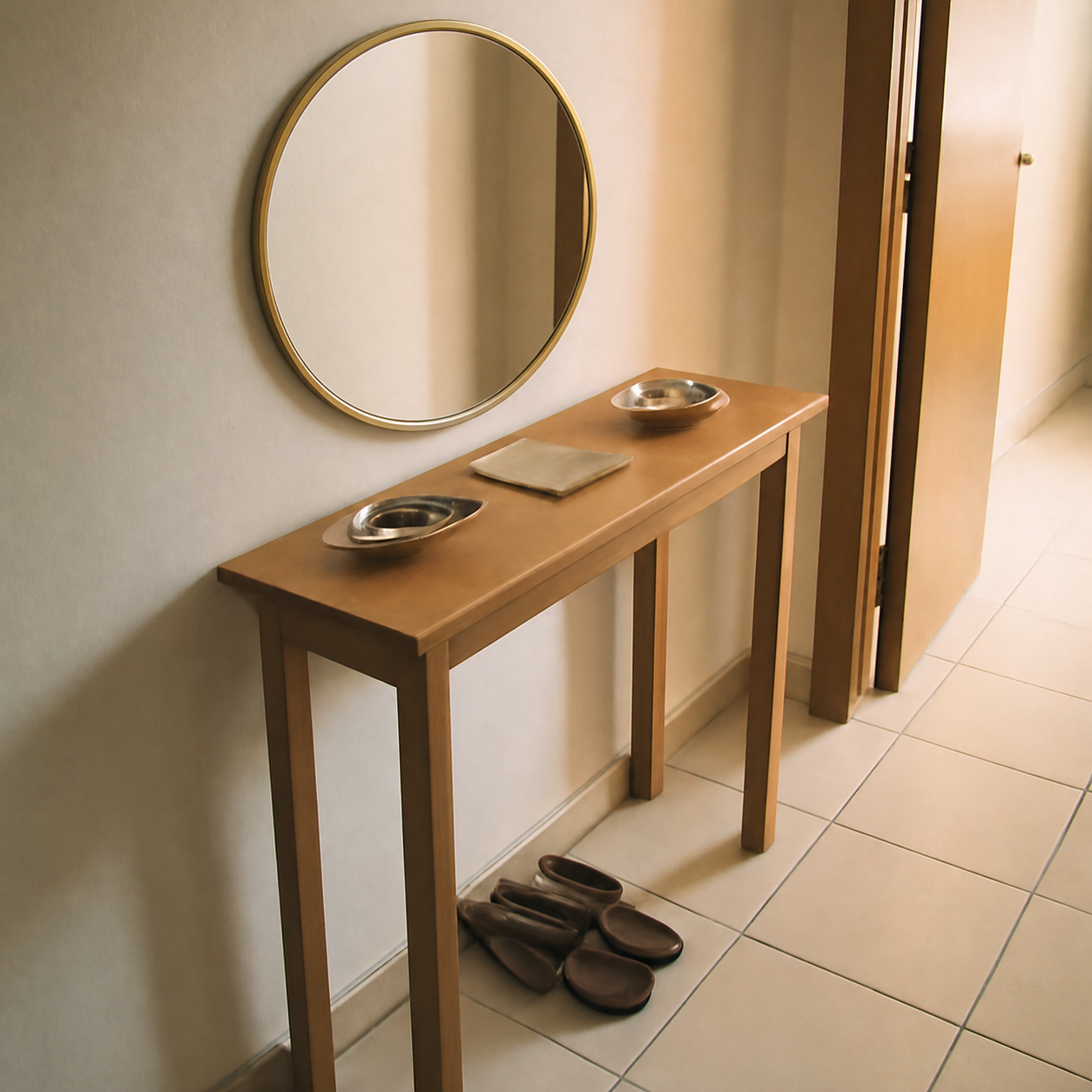
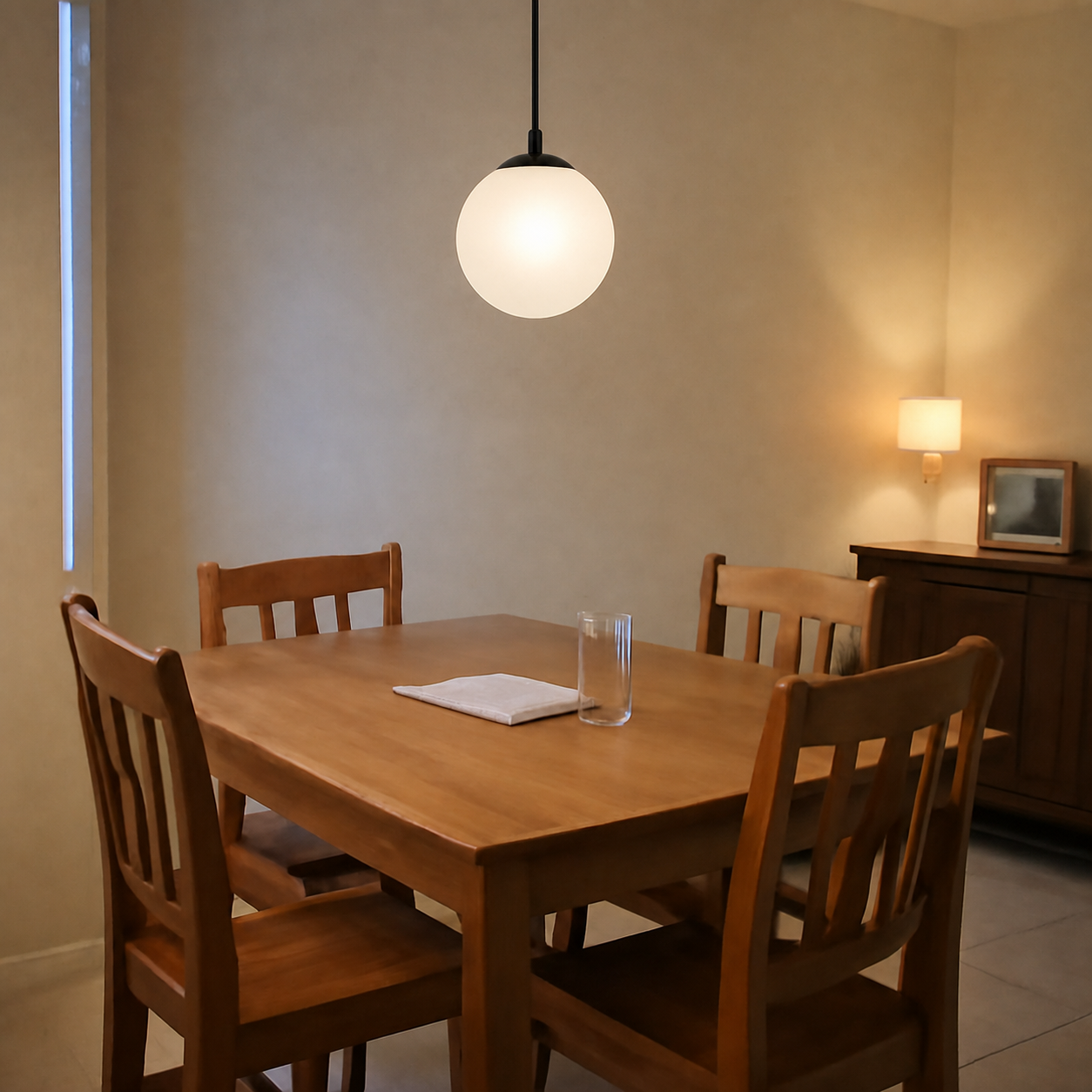
- Wall-mounted and surface decor. Mirrors, art, curtains, pendant lamps — pieces where the visual integration matters far more than the 3D footprint. See the mirror demo or the pendant lamp demo.
- Sharing and asynchronous review. A saved PNG can be sent to a partner, pinned on a board, or pulled up on desktop. AR sessions are ephemeral by nature.
Where AR falls down
AR is sensitive to room conditions. In dim light or on a cluttered floor the plane-tracking drifts and the sofa walks off into the wall. The 3D models are dimensionally accurate but their materials are simplified — a leather couch reads plasticky, a velvet reads flat. Worst of all, every AR app is locked to its own catalogue, which means you cannot use a single tool to compare a sofa from three different retailers.
Where AI composition falls down
A still image is just that — one angle. You cannot rotate it, pace around it, or check sightlines from the kitchen. AI scale is accurate when the product dimensions are known, but it cannot verify physical clearance — a sofa whose listed depth is wrong will be composited at the wrong size. And no visualizer replaces a tape measure for doorways and stairwells; see how to tell if a sofa will fit for the physical-fit checklist.
Which to reach for, by category
| Buying | Reach for first | Why |
|---|---|---|
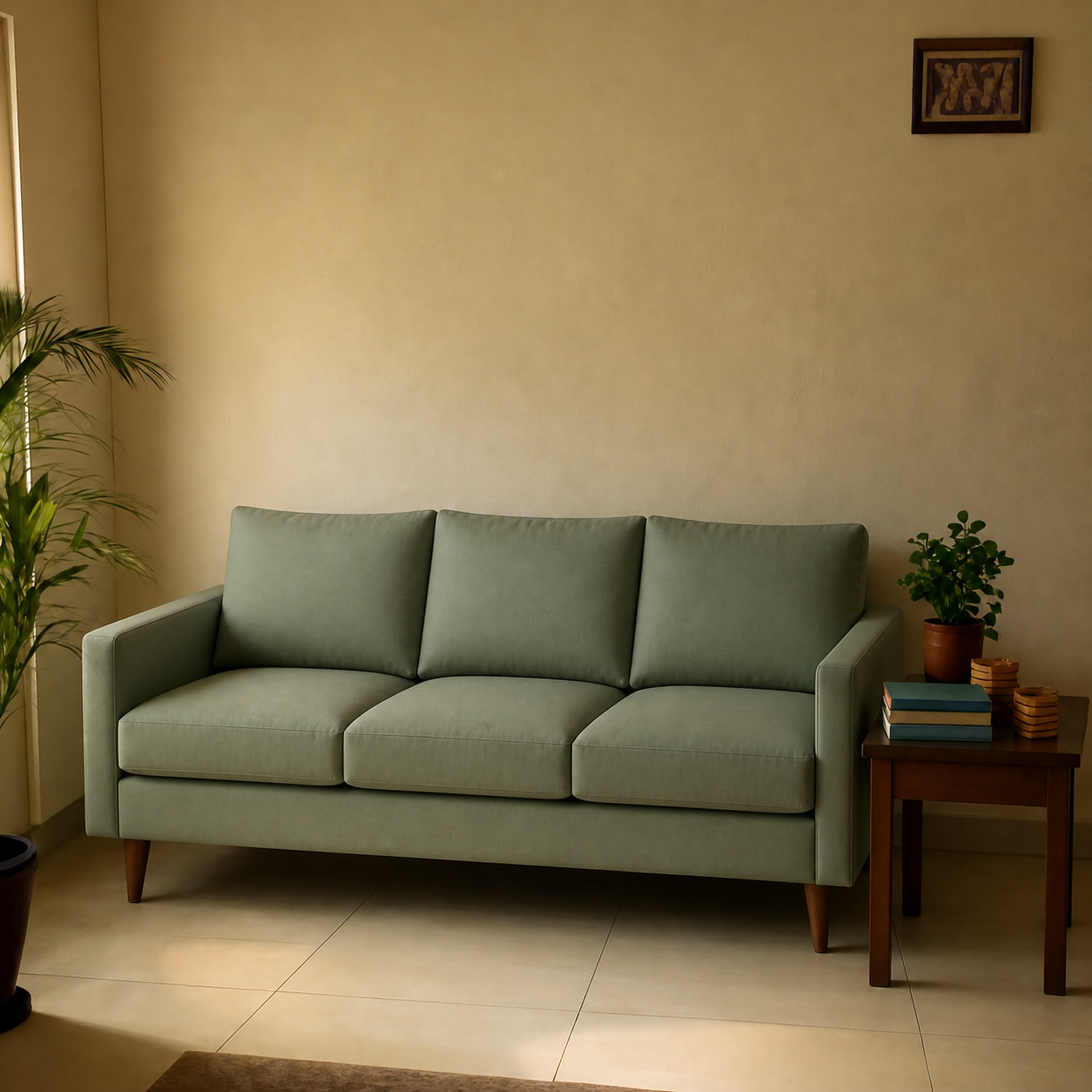
| Sofa / sectional | AR for footprint, AI for finish | Both matter equally |
| Rug | AI | Pattern + colour are the call |
| Mirror / wall art | AI | Wall integration is visual |
| Pendant / wall light | AI | Style + scale to the surface |
| Floor lamp / plant stand | AR | Footprint dominates |
| Curtains | AI | Drape + colour against light |
| Bookshelf / wardrobe | AR | Clearance and proportions |
The realistic workflow
For a big purchase like a sofa, do both. Use AR (if the retailer offers it) to confirm the piece physically fits the layout and leaves enough walking room. Then use AI composition with the actual product photo to check finish, colour, and how it reads against the rest of the room. The two tools take five minutes combined and cover what neither does alone.
For smaller decor — a mirror, a rug, a lamp — skip AR entirely. The 3D walk-around is overkill; the visual check is the only one that matters.
The short version
AR is a spatial tool. AI composition is a visual tool. Different questions; treat them as complements, not competitors. For broader context see the best free AI room visualizers in 2026 and the realism question for AI previews.