You can transform a home for Diwali under ₹5,000 if you focus on three things: layered warm lighting (diyas and string lights, not just LED strips), one statement entrance (a rangoli plus a torans or door garland), and a few high-impact accent pieces (a brass urli, a brocade runner, a cluster of marigolds). The trick is not buying more — it's placing fewer things deliberately and previewing the result before you commit.
The budget breakdown
A practical split for a ₹5,000 Diwali refresh covering a living room and entrance:
| Category | Items | Budget |
|---|---|---|
| Lighting | Diyas, string lights, candles | ₹1,500 |
| Entrance | Toran, rangoli colours, marigolds | ₹1,000 |
| Statement pieces | Brass urli, decorative diyas, cushion covers | ₹1,500 |
| Flowers + fresh | Marigold strings, lotus, tuberose | ₹1,000 |
Lighting — the single biggest lever
Diwali is the festival of lights. If you skimp on lighting, no amount of decor compensates. The principles:
- Layer light sources, don't over-illuminate. A single bright fixture flattens the room. Several smaller warm sources at different heights creates depth.
- Warm white over cool white. 2700K is the colour temperature you want. 4000K+ feels clinical and kills the festive mood.
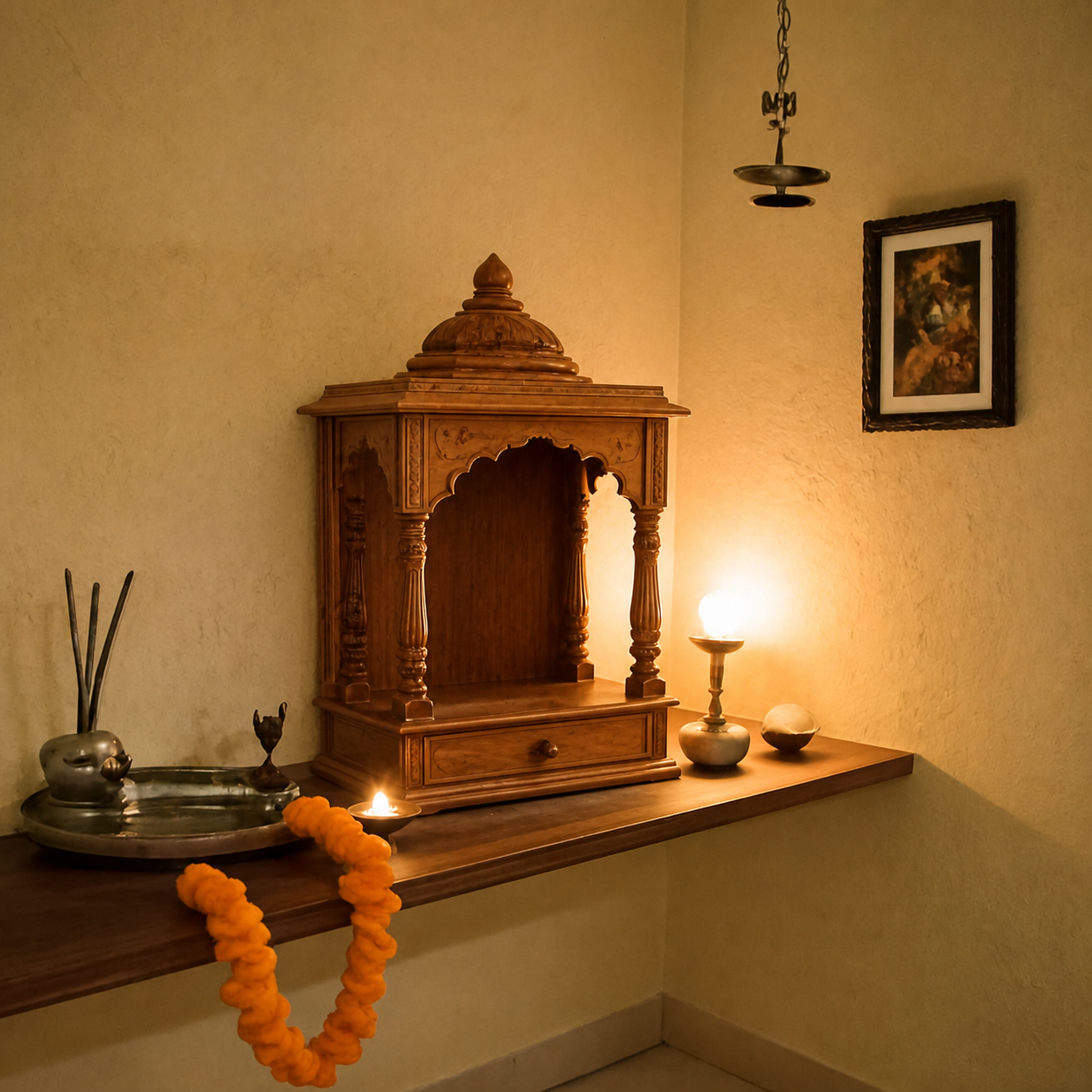
- Diyas at floor and shelf level. Real diyas with oil > LED “diyas”. If you must use electric ones, buy the realistic-flicker kind, not the steady-glow ones.
- String lights inside, not just outside. A string of warm fairy lights wound through a tall plant or draped along a railing transforms an interior more than ten diyas would.
The entrance — first impression wins
The entrance is the most visible part of the Diwali look and the easiest to get right. The minimum viable Diwali entrance:
- A toran or fresh marigold-and-mango-leaf door garland.
- Two diyas flanking the doorway at floor level.
- A small rangoli at the threshold — even a simple one in white rice powder reads beautifully.
Total cost under ₹500 if you make the rangoli yourself and buy fresh marigolds from the local market the morning of.
Statement pieces that punch above their cost
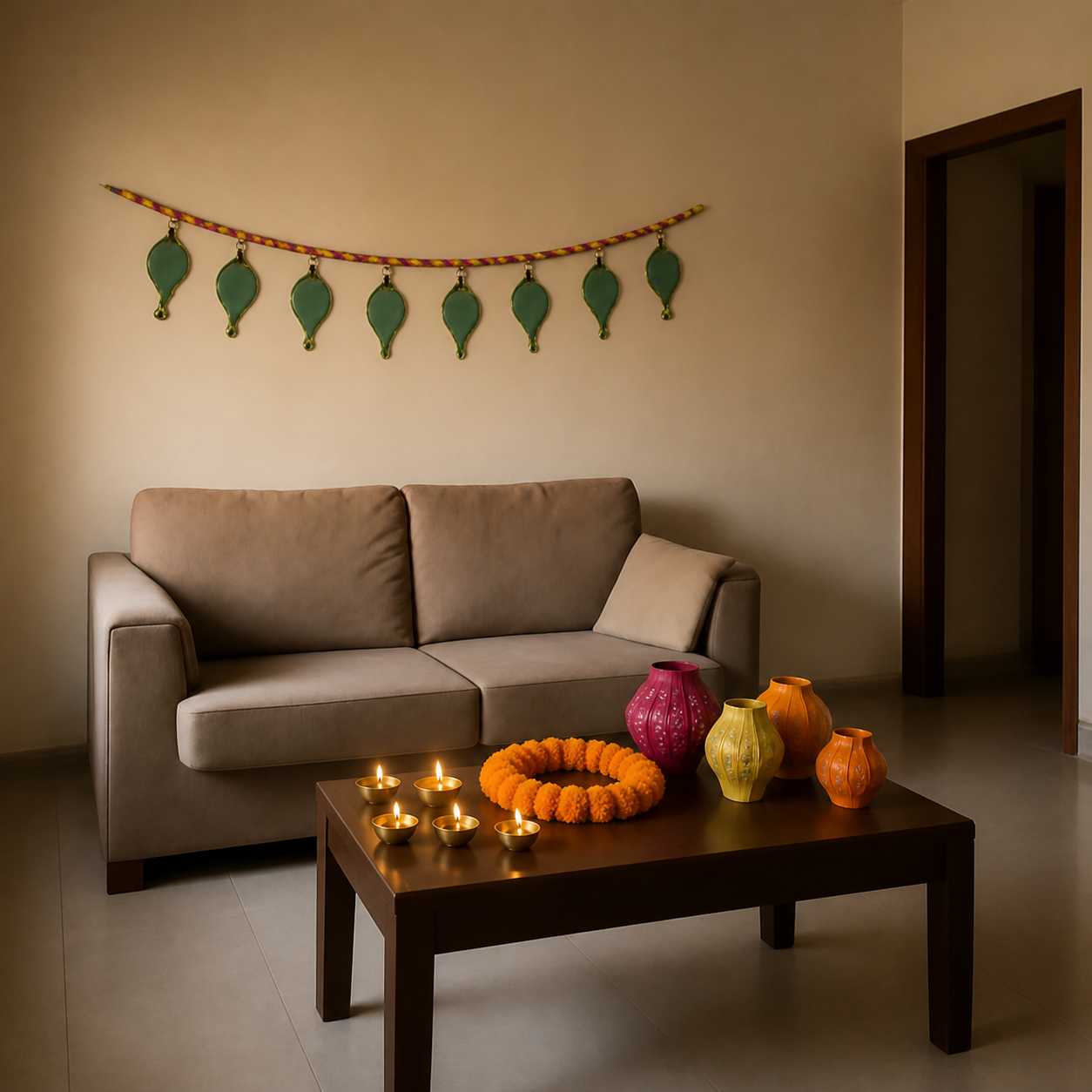
- Brass or copper urli with floating diyas + petals. ₹400–₹800. Sits on the coffee table or entryway console. Reads intentional and traditional.
- Brocade or zari cushion covers. ₹150–₹400 per cover. Swap them in for your everyday covers for a week. Far cheaper than buying new cushions and equally transformative.
- A clay-and-thread Diwali wall hanging. ₹300–₹600. One above the sofa or against a feature wall.
- Cluster of glass votive holders. ₹50–₹100 each. Group five of them with tea lights on a tray. Reads like a designer setup at a tenth of the cost.
Preview before buying — the budget-saver
The fastest way to waste Diwali budget is to buy decor that looks beautiful in the listing photo and lost in your actual room. A common version: a ₹2,000 ornate brass piece that's the right idea but too small for the space — looks like an afterthought, not a statement.
Before ordering anything more than ₹500, drop the product image into a photo of your actual living room. See the example at the Diwali living room demo — the same room, with and without Diwali decor previewed in. The difference in how a piece reads against your real walls and furniture is hard to overstate.
More ideas in the Diwali decor visualizer category.
What to skip
- Coloured LED strip lights. Cool-white or RGB strips feel like a wedding-hall reception, not a home. Stick to warm white string lights.
- Plastic torans + plastic flowers. Fresh marigolds cost less and look better. The difference shows on camera and in person.
- Over-decorated mantel. Three intentional pieces beat ten cluttered ones. Edit before you buy more.
- Last-minute Amazon impulse buys. They arrive on the wrong day and look generic. If you're buying online, order at least a week before — and preview each piece in your room before clicking buy.