The cheapest room makeover is one you plan completely before paying for anything. The order is: take inventory of what you already own, identify the one or two pieces actually missing, build a focused mood board, tape-test new layouts on the floor you have, and preview candidate pieces in a photo of the room before any credit card moves. Done in this order, a makeover takes a week of decisions and zero return cycles. Done in the reverse order, it takes three months of deliveries and one or two pieces you wish you hadn't bought.
Why most makeovers fail in the wrong order
The default makeover loop is: scroll Pinterest, find a room you love, buy the closest item to it, wait for delivery, place it, feel underwhelmed, scroll again, buy another. Three months in, you've spent significant money and the room still feels unfinished — because every purchase was a reaction to an aspirational photo, not a decision about your specific space.
Flipping the order — decision first, purchase last — is the single biggest saving. Furniture-return rates for online big-ticket items run 20-30% by industry estimates, and most of those returns come from purchases made before the buyer understood what the room actually needed. (See how often people return furniture bought online for the underlying data.)
Step 1 — Inventory what you already own
Walk into the room with a notebook. List every piece of furniture, every lamp, every rug, every wall hanging. For each one, write down two things: is it staying? and is it the anchor or is it filler?
Anchors are the pieces the room is built around — usually the sofa, the bed, or the dining table. Filler is everything else. Most makeovers go wrong because the inventory step gets skipped and the first new purchase fights the existing anchor.
- Identify the room's anchor — the one piece everything else has to relate to.
- Note the existing wood family, metal finish, and dominant fabric texture.
- Mark which filler pieces are doing actual work and which are just “there”.
Step 2 — Identify what's actually missing
Rooms feel unfinished for a small number of specific reasons. Look for these before adding anything:
| Symptom | Usually the missing piece |
|---|---|
| Walls feel bare | One large mirror or piece of art, not five small ones |
| Room feels cold at night | A second light source — floor lamp or table lamp |
| Furniture floats | A correctly sized rug (most underdone room signal) |
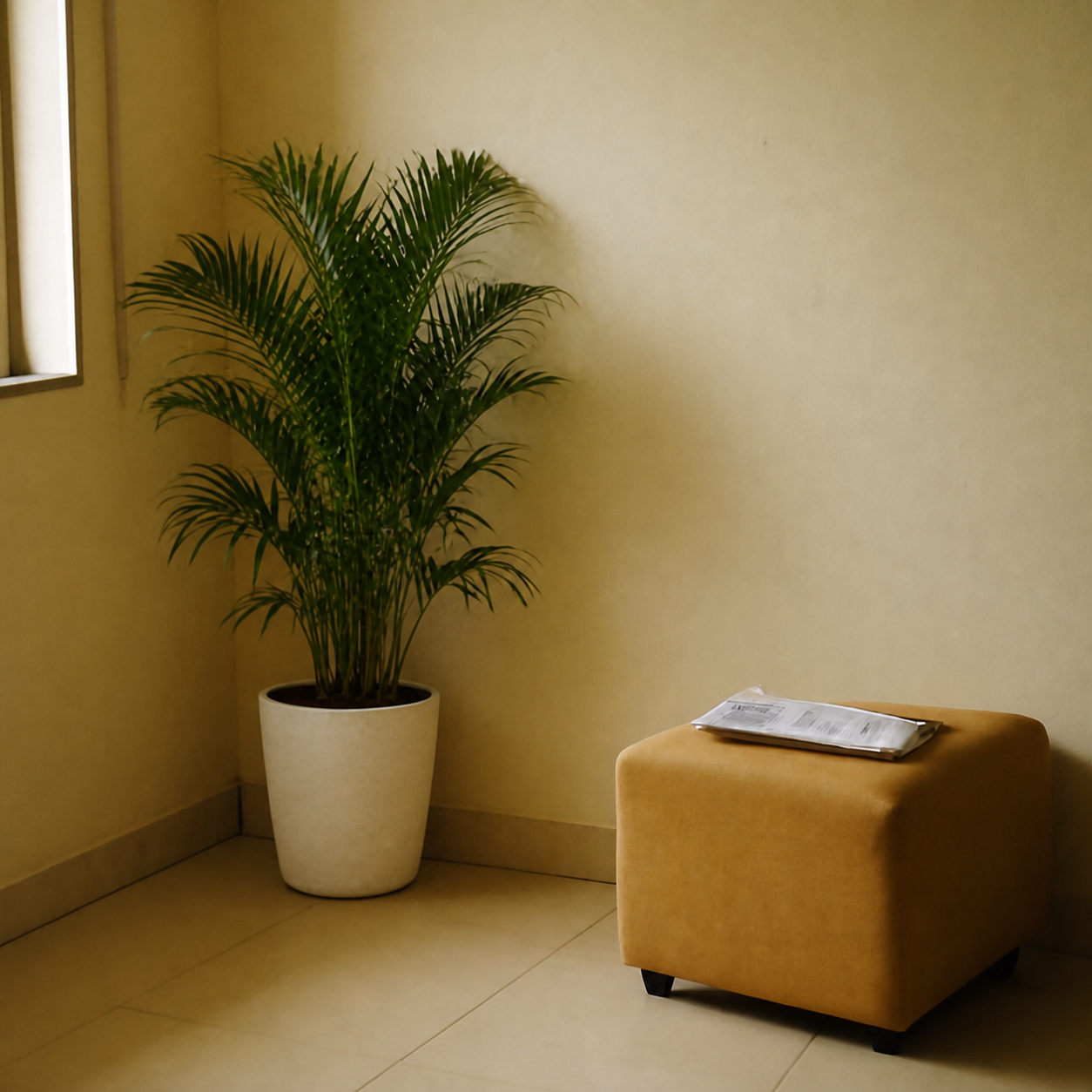
| Reads “hotel” | A textured or natural element — plant, basket, throw |
| Echoes | Soft surfaces — curtains, rug, upholstered piece |
| No focal point | One bold piece above the anchor — art, mirror, statement light |
The exercise is reductive on purpose: most rooms need one or two focused additions, not eight. Identify the one symptom that bothers you most and aim the makeover at that.
Step 3 — Mood board with intent, not aspiration
Pinterest is great for direction and terrible for shopping. Aspiration mood boards have you saving rooms in five different styles; intent mood boards force you to pick one direction and save only references that show the missing piece in a room your size and palette.
A useful mood board has:
- 5-10 references, not 50.
- One dominant colour palette across all of them.
- At least three references that show the room scale you actually have.
- At least two references that include the existing anchor piece in roughly its current form.
Step 4 — Tape-test the new layout
Before buying anything, rearrange what you already have. Most rooms can be improved 30-40% by simply relocating the existing furniture — and you find out what the room is missing only after the existing pieces are in the right places.
- 1Move the sofa off the wall by 6 inches — see what changes.
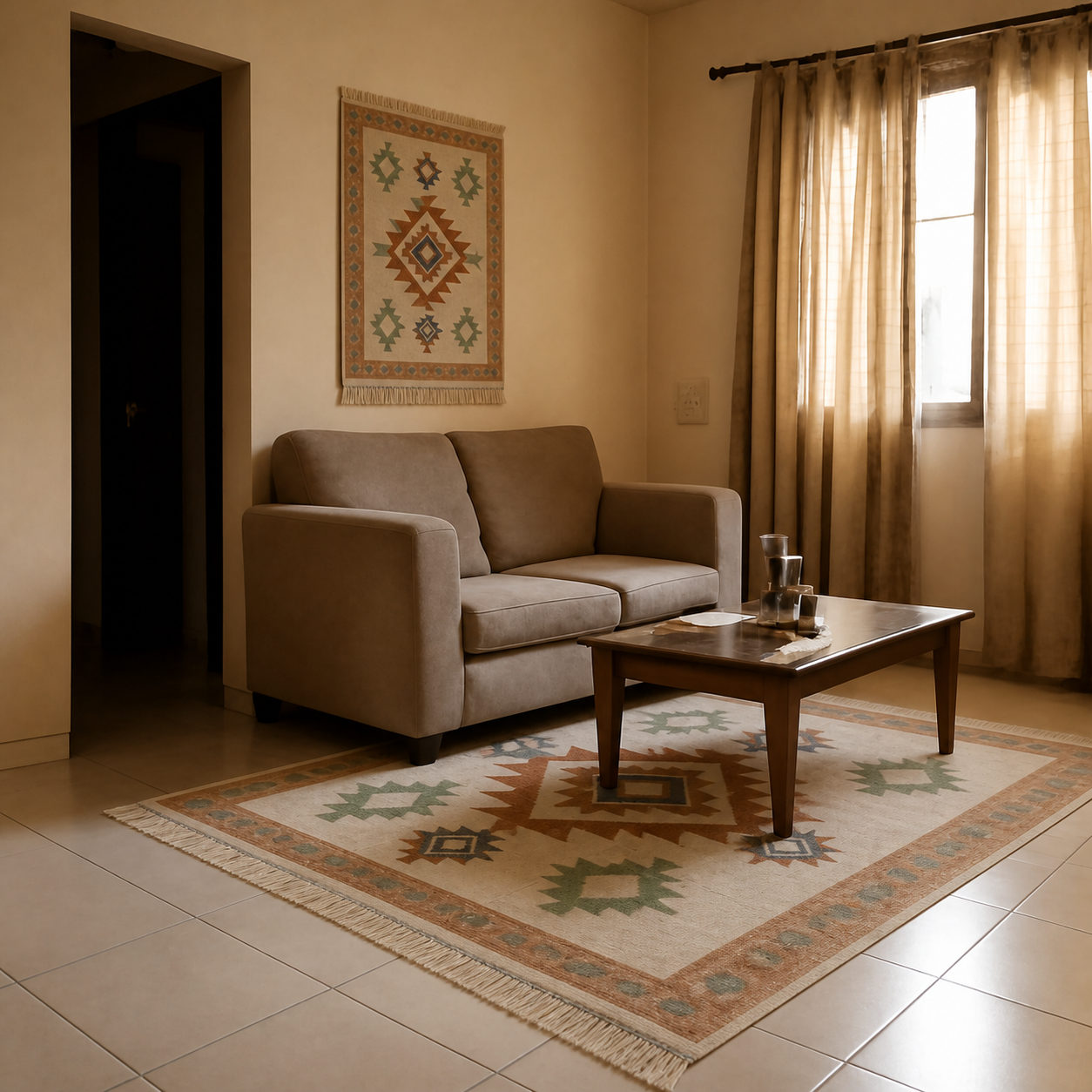
- 2Tape out where a rug would go at its correct size — see if the room is actually missing a rug or just missing definition.
- 3Tape out the footprint of any candidate piece on the floor and walk around it for 10 minutes.
- 4Newspaper-tape the outline of any candidate mirror or wall art on the wall, centred at 57-60 inches.
For category-specific sizing, see how to choose rug size for a living room and how to preview a mirror or wall art before buying.
Step 5 — Photo-preview candidates before paying
The last gate before any payment is to drop the actual product image into a room visualizer that places it into a photo of your actual room at correct scale, lighting, and perspective. This is the step that catches the things tape and newspaper miss:
- Fabric and wood colour against your wall paint and existing pieces.
- How the silhouette reads at your eye level.
- Whether the new piece honestly echoes the existing anchor (the matching test).
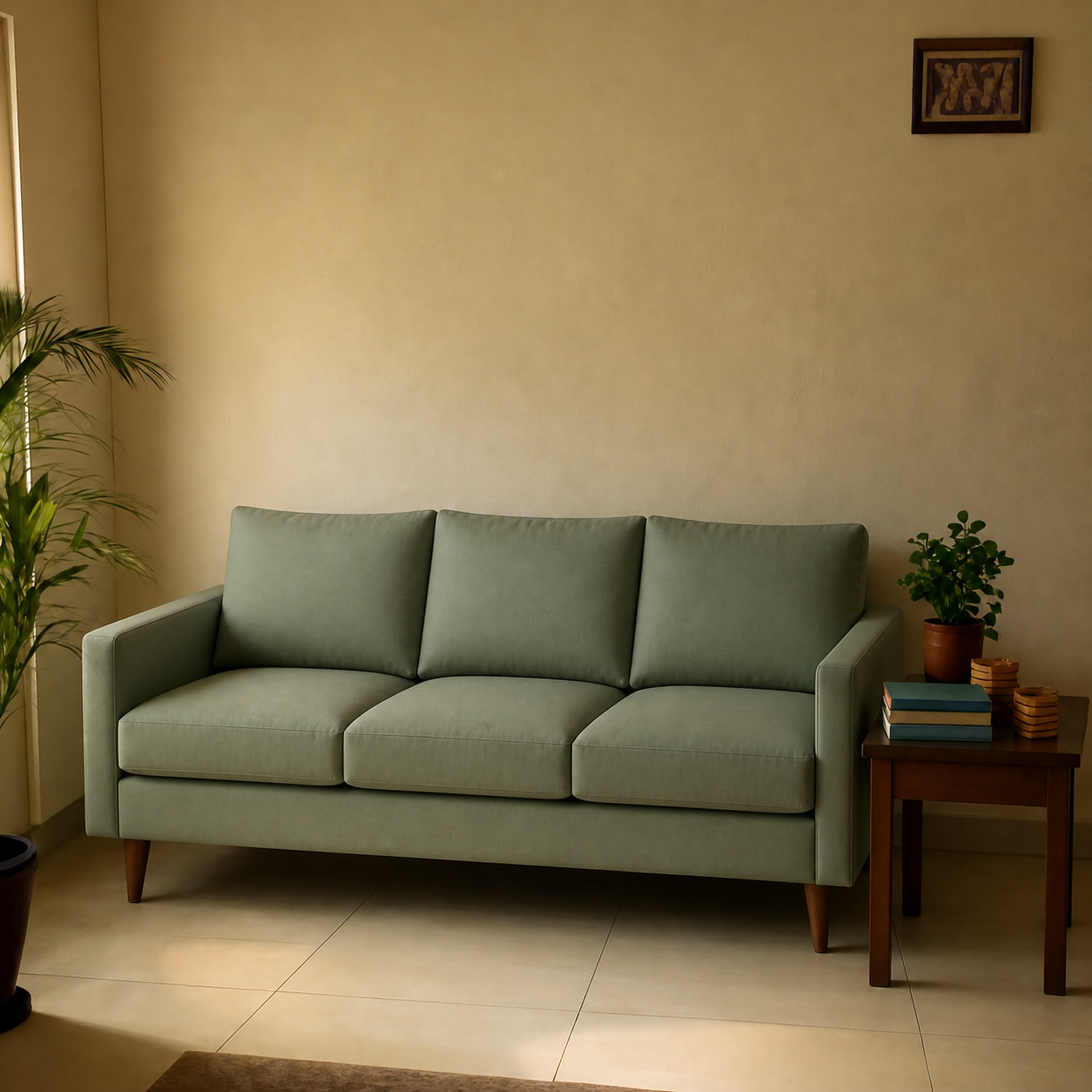
For a worked example of how the photo preview reads, see a sofa placed into a living room or browse the sofa category.
A realistic week-by-week schedule
| Week | Action | Cost |
|---|---|---|
| 1 | Inventory + identify missing piece | Free |
| 2 | Mood board (5-10 refs, one palette) | Free |
| 3 | Rearrange existing furniture + tape-test layouts | Free |
| 4 | Shortlist 3 candidates per missing piece, photo-preview each | Free |
| 5 | Order only the winners | First spend |
The decisions that save the most money
- Skip the second rug. Most rooms need a correctly sized first rug, not a second one layered on top. The layered rug look is a substitute for a rug that was too small in the first place.
- Pick the anchor piece last. Counterintuitive, but: choose the rug, the lighting, and the art first when adding to an existing anchor. The sofa or bed you already have sets the constraints.
- Buy one statement, not five accents. One bold piece outperforms five tasteful ones in the same room.
- Preview every candidate. Returns of online furniture cost both sides money; previewing adds zero cost and removes most of the misses. See why furniture returns are so expensive.
Common makeover mistakes
- Buying first, planning second. The expensive version of every makeover.
- Mood-boarding without a palette. 50 saved rooms in five colour schemes is a wish list, not a plan.
- Skipping the rearrange. The existing layout is rarely optimal. The free improvement comes before the paid one.
- Treating “return-friendly” as risk-free. Returns are friendly to your wallet, not to your time or the environment. Get it right the first time.
Quick checklist
- 1Inventory: list everything in the room and mark the anchor.
- 2Diagnose the room's actual symptom and find the one missing piece.
- 3Mood board with intent — 5-10 refs, one palette, your scale.
- 4Tape-test layouts and rearrange existing furniture first.
- 5Photo-preview every candidate before paying. Only then order.